Tokyo Marathon 2026: Completing My Six-Star Journey at the Almost Perfect Marathon
After years of failed lottery attempts, I finally traveled to the country of emoji, sushi, and origami to run the Tokyo Marathon. Despite its near-flawless organization, the race felt surprisingly different from the other Majors.
Published on 11th of March, 2026

The time has come, completing the six World Marathon Majors is going to be on my achievements list!
Tokyo Marathon is my final one of the original set. When I did Berlin Marathon back in 2013, I wasn’t fully aware of the group of races, nor was it on my mind to run in all these cities, but over the years I developed an interest. London followed in 2015, but after that I went on an eight year Majors break. It was only when I accidentally qualified for Boston 2023, that, combined with post-pandemic vengeance traveling, I decided to fly over the Atlantic and run that historical race. And when Boston was booked, I looked into options for New York City, too. Because you never know when the next global crisis will hit and render the trip impossible again. Might as well go and fulfill the dream of having a go at NYC Marathon, too.
With four of the six done by 2023, my eyes focused on the remaining ones. Chicago in 2024 was great, too, and after applying for Tokyo over the previous five or six years, just for the pure heck of it at first, luck was finally on my side for the 2026 edition.
🍀 Luck Needs to Be Your Best Friend
As of 2026, the chances of getting into New York City Marathon via standard lottery are said to be at around one percent. A whopping 99 percent of people who try via general entry lottery will fail. I don’t know if the odds are better at Tokyo Marathon, though. Although never officially published, it is just as notorious for having brutally bad odds. Ten years of failed applications are not unheard of. This is true for all of the Majors, especially after the pandemic. Popularity has just exploded.
Every of the big races handle the huge amount of interested people in a different way. A simple lottery is often involved, some time qualifiers are let into the starting field, too, and there’s usually an option to run for charity. In Boston, for example, the time qualifier slots make up a very large chunk of the field. This makes it easier for fast runners to get into the race, but tougher for everyone else. In London, you have quite good chances to make it as a charity runner, but with over one million lottery applicants last year for the first time, luck really needs to be on your side in case you’re not going the charity route.
Tokyo has all three options available, too, but differently weighted. The time qualifiers have to run near pro-level times at a previous sanctioned race. It’s currently set at 2:54h for women and 2:28h for men. And then these semi-pros still have to go through a lottery process for the very few spots available to them. Around 4,000 of the 37,000 Tokyo Marathon slots go to charity runners. I looked into that previously and it’s required to collect at least ¥100,000, about €550 or US$630. But, and here’s the twist, or at least so I’ve heard from a friend who successfully entered using this method: They accept the 4,000 people who collect the most amount of money, but don’t tell you how much is exactly needed to be safely in that group. So you’re left guessing and throwing in more and more money until you feel like your sum is among the 4,000 highest collecting attempts. Of course, with the money going to charity in the end, this is an ethically solid structure. It just makes it into a gamble for runners who really want to do the race and choose the charity path.
Then, there’s the rich people’s way, booking the race via a travel agency package deal. In some cases, this is actually quite affordable, but not here in Tokyo. Firstly, it’s only available to those people who live in countries where companies offer these travel package deals. With Germany being among those, the option is generally open to me. But the cost is astronomical for Tokyo. The deals I’ve found included just the four nights hotel stay and the marathon race ticket but started at about €4,000 (US$4,500). Flights needed to be purchased extra.
For both London and New York City I used the travel agency path, and both times it was really affordable in contrast. I think in London the hotel plus race ticket cost me just around €400–500, about one tenth of what Tokyo asked for, and the New York City deal I got from Ali Schneider Reisen included the flights and race ticket, no mandatory hotel, for a total of just under US$1,400. Again, that already included the transatlantic flights and the race ticket! It’s been an amazing deal, almost too good to be true.
But with that option out of the question for Tokyo, it only left the general entry lottery drawing for me for a few years. Loss after loss after loss.
Until I think in 2022 or 2023, I learned about the Virtual Tokyo Marathon option. Newly introduced, this gave people in a situation such as mine the option to run a self-timed half marathon alone at home, pay a small entrance fee of about €15–20, submit the results to the Tokyo Marathon Foundation, and become eligible for a drawing at a few extra slots of the real race. This could be repeated roughly every month, for a new chance each time. Naturally, tens of thousands of people participated each month, if not more, and with just a handful of tickets at each drawing the chances were super low, too. But a German blogger I follow, Patrick, got his ticket to Tokyo this way, so I saw it as confirmed to be a legitimate possibility of making it to the race. I did that about half a dozen times, but failed at each of the drawings, too. With every chance costing a little extra money, eventually the point was reached for me where I didn’t want to burn any more of it for a seemingly decreasing chance each month due to even higher interest of the people—rising participation numbers for the same amount of slots.
Then I heard about the so-called ONE TOKYO GLOBAL option. That’s like an annual club membership which basically doubles your chances at the general lottery for an amount of about €170 or US$200 per year, or, functionally, per attempt. For the 2025 race I tried that option but lost with both my lottery tickets. So I rage-quit my membership at ONE TOKYO GLOBAL, only to re-register a few months later for the 2026 drawing.
And then, it finally happened. With yet another year of two attempts at getting a slot, I got lucky. In total, I must have spent around €500 (US$600) spread out across 3–4 years on all the Virtual Tokyo races and the two years of ONE TOKYO GLOBAL membership fees, but in the end it worked out.
🎌 I’M GOING TO JAPAN!
In conclusion, if you’re not filthy rich, luck needs to be on your side. But you can help increase your luck by spending a bit of money over the years and maybe make it into the race a handful of years earlier compared to participating in just the free general entry lottery.
Taking everything into account, I used around eight attempts during around five years of trying until I succeeded. My chances were mathematically improved by the measures I took, but of course it still could have taken another couple of years or more. So, the charity option doesn’t look too hard in comparison now—given you’re comfortable soliciting your friends and family to pay for your trip, so to speak. But again, the money goes to charity, and that’s a good outcome.
By the way, I haven’t yet mentioned the actual entry fee for the race. You need to pay that as well, of course. It’s been in the middle of the range of all the Marathon Majors with US$250 (€215) for the 2026 edition.
💸 Cost of the Trip
I’m sharing all this because I’m interested in this stuff when reading blog posts by others, too.
I was prepared for the worst, because I actually had no idea about the current situation regarding cost of living in Japan. I’ve never been to that country before but from anecdotal stories I remembered it to be super expensive. But as is often the case with low expectations, you end up being happier when things turn out to be different. Or in this case, surprisingly incorrect.
Well, the flights from central Europe do make a dent, for sure. It’s a long way even under normal circumstances. And these days, thanks to Russia’s aggressive expansion attempt (read: completely unnecessary and devastating war on Ukraine), the routing has to be extended by a few more flight hours to avoid Russian airspace, making the flights even more expensive.
They were by far the most expensive part of the trip. Just for posterity’s sake, I booked a connection via Frankfurt airport and the politically mandated detour made the long flights take a whopping 14 hours on the way there via central Asia, and even 15 hours on the way back across the Arctic, partly because yet another war was started in the Middle East while I was in Tokyo, making the central Asian flight path unusable, too. It doesn’t seem like it’s getting any easier these days, seem from a geopolitical perspective.
It’s not a good sign of the progress of humanity that the last remaining fly-over option is the eternal ice of the North Pole region where no conflicts take place as of yet, but that’s only for the reason that it’s mostly uninhabited by humans.

Anyways, once you’ve made it through the global turmoil and landed in Japan, though, the tables turn. I booked both the flights and the hotel right after learning about my success at the lottery, because early prices are lowest. The hotel I chose, located in the upper class Ginza district, just a ten minute walk from the central Tokyo Station, offered a comfortable room size, had breakfast included, and sported four stars even, while coming in at just €160 (US$180) per night! I couldn’t believe it. A steal! For all the service and comfort I received there, double the price would have been justified. It even had a bath tub and one of those typical electrical Japanese toilets with lots of funny features. An easy 10/10.
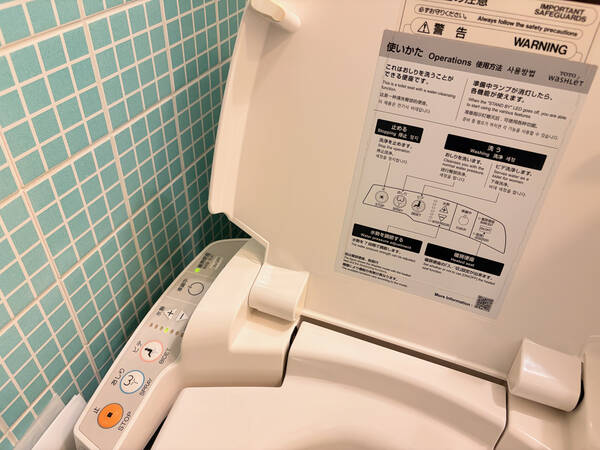
Prejudices destroyed. Previously, when thinking about Tokyo hotels, either the German teenage pop band came to mind, or, those capsule hotels where people are stacked like sardines, because the space supposedly is just so scarce in the city. Well, not true. At least not universally true.
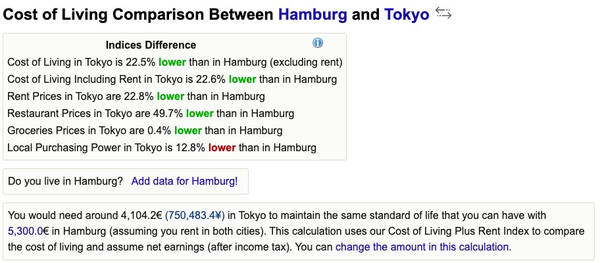
And then, there’s the general cost of living in Tokyo. Right now, the Japanese yen is quite weak compared to the euro. This came in very handy, so I left Hamburg with just a half packed suitcase and plans to buy lots of sports gear so I could go home with a full one. Spoilers: I succeeded at that.
🗾 First Impressions of Japan
Even before starting the trip, I suddenly became aware of the huge cultural impact Japan has on the whole world. And now, I’m even more in awe about that. I can’t say I’ve ever been one of those Western guys who are so much into it they start learning Japanese without any reason or immerse themselves in Anime culture or whatever, but when you think about the large footprint the country has left on the planet, you can’t help but be respectful of that.
Let me remind you of a few things, starting with something very obvious, emoji. Yep, we’re all fans, we’re seeing and using them daily, and they’re as Japanese as it gets. The word itself is Japanese and means “picture character” (how fitting) and the whole concept has been invented there. Do a quick search for “Japan” on your phone’s emoji keyboard and see how many results you get. Now do one for “America”, “France”, or your own country. Speaks volumes, right?
Here are a few more fun things we’re all familiar with that’ll probably make you go “oh right, these are also from Japan!” – along with a few fitting emoji, because it’s possible:
- 👘 Sumo wrestling
- 🥷 Ninja warriors
- 🎎 Geishas and Shogun
- 🍣 Sushi and 🍜 ramen, 🍱 Bento boxes
- 🍶 Sake rice wine and 🍵 Matcha tea
- 🚅 Shinkansen bullet trains, super fast and punctual
- 🧘♂️ Zen Buddhism (created in India, flourished in China, made largely popular in Japan)
- ⚔️ Samurai with Katana swords (remember the sword smith Hattori Hanzo in the Tarantino movie Kill Bill? Hanzo actually was a historical figure of the 16th century, a samurai and military leader, but not a swords smith like in the movie); 🔪 Japanese knife making techniques are still quite revered, globally
- 🦢 Origami, the art of carefully making little sculptures out of paper—the elderly lady in the plane seat next to me casually made a beautiful swan out of her napkin as a gift for the flight attendant
- 🃏 Pokémon—gotta catch ’em all!
- 🎮 Nintendo: who doesn’t know the Super Mario Brothers and loves the Nintendo Switch console? By the way, the Sony PlayStation is from Japan as well!
- 🎨 Anime, the tradition of telling stories via drawn and animated art and figures like 🦖 Godzilla
- 🚗 A whole range of car manufacturers like Toyota, Honda, Nissan, Mazda, Subaru, and Suzuki
- 📸 And not to forget the world’s most important camera companies, namely Canon, Nikon, Fujifilm, and Olympus
What an impressive list, right?

🎫 Reality Check
So in a way we’re all quite familiar with Japan even before having ever set foot in the country. Still, when I arrived there and tried to figure out how to best get into central Tokyo from Narita airport, it took me a while and I was surprised by how exotic it all felt to me. Even though technology is everywhere in Japan, this particular process of buying a Skyliner train ticket was everything but intuitive to me. A badly translated online form had to be filled out, payment needed to be made via manually filling out a credit card form that didn’t accept pasting, and afterwards a QR code was sent to my email which I was told to redeem at a real-person office inside the station. The clerk scanned my code and then proceeded to actually stamp two separate little paper tickets before handing me two other chipped tickets I was told to then use at the face-scanning stations for entry. In the end this took about an hour including waiting in line at the various points before I was allowed to board the train. Afterwards I found out there were easier options, too, but this was the one presented to me at the time.
Welcome to Japan, I guess?
In all fairness, the culture shock I experienced right after arrival went away really quickly. After half a day in the city I already felt right at home, actually. Everything is just a little bit different, but there are so many conveniences about Tokyo. Such as the relaxed atmosphere. Everything is so clean and tidy, people are respectful and quiet, there’s apparently virtually no visible crime or misbehavior, so it’s a really good place to spend time in. While recently having been eclipsed by neighboring Osaka, Tokyo has often appeared on The Economist’s respected list of the world’s most livable cities. And I can see why. It just felt really easy there. Everything works because it’s well maintained. I didn’t run into any real issues and that certainly affected my own behavior in ways I’ll explain later on. The type of selfless and harmony-seeking behavior is contagious.
I was able to spend four nights in Tokyo, with a fifth one taken up by the flights needed to get there. Sophie was again able to take care of the four kids and her job at the same time so I could go on this trip and I was really grateful to have that amount of time in Japan. The plan was to make the most of it while I’m there.
While the Sunday would be used up by the marathon race, Friday and Saturday offered an opportunity to explore. High up on my list were having real authentic sushi and ramen, both of which justified a quick break from my vegetarian diet. I love food and I decided to not let that opportunity slide. One of the days would also be needed to do the marathon expo trip and bib pickup, which I paired with some running shoe shopping at the big stores of the Japanese brand Asics, but also at Hoka and Nike.

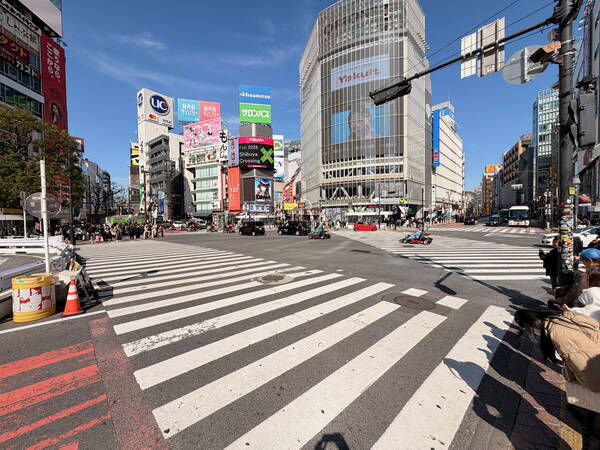
Then, a trip to the world famous Shibuya crossing had to fit the schedule, too. That’s the one that fills up with incredible amounts of people in an instant, before everything is completely free again, revealing the carefully painted crosswalk stripes leading in all directions. Rinse and repeat, forever.
Some downtime was necessary too, I had a marathon to run after all. But my daily running streak had to continue, of course.
🔁 Little Excerpt: Streak Running Shenanigans
I’ve talked about how serious I’m taking my running streak. The number of consecutive days on which I’ve ran has recently passed 1,500, just over four years. Flying across continents and timezones is one of the tricky bits making it tough to keep a clean streak. Although it’s difficult, I particularly enjoy these little challenges. Everyone defines what makes a clean running streak differently, but for me it has to feature at least one run during each UTC date. Living in Hamburg, which is just one hour removed from UTC, or two hours in summer during Daylight Savings, this is really easy to do because no run usually interferes with a date change close to midnight.
In Japan though, which was nine hours ahead of UTC at the time of my stay, this got tricky. My usual ritual is a morning run, an hour after breakfast or so. On vacation, that would be at around 9:00 a.m., which is exactly the time the UTC date changes. So, if I one day ran before 9:00 a.m. and the following day a little later than 9:00 a.m., which totally could have happened, I would have accidentally skipped a full UTC date, thus ending the streak! 😰
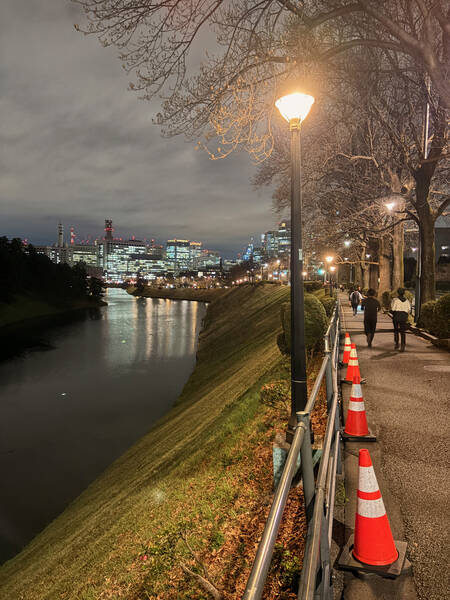
That being said, I’m pretty sure not many people exist on this planet which are doing a running streak and take this stuff as seriously as me. I’m aware of that.
What did I do to solve the problem, then? On nearly every day I’ve been there, I added a Safety Mile run in the later afternoon. My morning runs usually happened earlier than at 9:00 a.m. and I couldn’t be 100% sure that each next morning run would be as early as well, so that was a clean solution to me. That little stroll around the block also felt good and didn’t even require taking a shower. If you love running, it all comes really easy.
Regarding both long travel days, which can become really difficult to navigate because of the lost hours due to crossing timezones, I was able to easily solve this problem by just going for a run right before leaving for the airport and one more run right after reaching my destination, both times. This worked out with the flight times, and thankfully no huge delays jeopardized my plan this time. That hadn’t been the case that one time I had to run a mile inside of Charles-de-Gaulle airport in Paris a couple years ago. But here, no problems.
🎪 Marathon Expo Day, My Happy Place
I have a few Happy Places that are surprising to many people. The ones at the top of the list are IKEA stores, airports, and Marathon Expos. The bigger, the better. I can spend hours in those, exploring all the products, advertised races, trying samples, entering giveaways and winning accessories, or just walking around aimlessly.

Getting to the huge expo building called “Tokyo Big Sight” required a thirty minute bus ride from central Tokyo, which by the way had not as many impressive skyscraper buildings as I had anticipated. The buses were all full to the brim with runners trying to go to the same destination as I was, unsurprisingly, so I decided to just walk in the direction and see after how many of the seven kilometers I would get tired. After about an hour of walking in the sunny and warm spring weather, a bus came along that wasn’t completely full, so I joined in.
I’m guessing about 20–30% of people in Japan are wearing face masks, by the way. Even in the outdoors. It’s been a reminder of the pandemic, but it has been part of life in Japan for a lot longer. I admire the idea behind it—when you’re sick you don’t want to jeopardize the health of others around you as well. People in many other countries should take the hint. In some situations I joined in and put on my own mask, but I admit I did so for more selfish reasons. I didn’t want to get sick before the race.
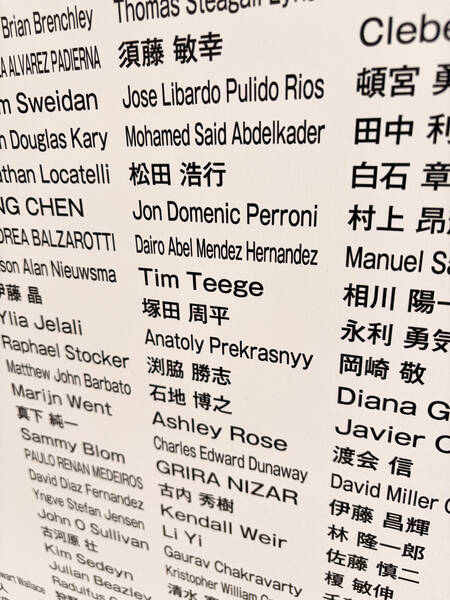
Arriving at the expo, everything was perfectly organized. Countless volunteers sporting their recognizable jackets were holding signs showing us the way, smiling and greeting us all. The paths we needed to take were marked with ropes on both sides so nobody could get lost. It did give off a bit of a herding animals vibe, but I appreciated the clear order here. Once inside the main hall, I found it to be set up just like all the other Majors expos. All the basic staples were here: The big branded entrance gate, the wall of names, the info desk, the dozens of bib pickup stations, and of course the main sponsor exclusive gear booth that took up half the hall’s footprint.

Here in Tokyo, the main shoe and clothing sponsor is Asics, the famous Japanese brand from Kobe, and its products were in just as high of a demand today as the main sponsor gear at the other Majors expos I have been to.
Bib pickup went smoothly and my package thankfully already contained the special bib that is meant to be put on your upper back, stating that this will be my sixth Major and that I’m about to receive that huge special medal for completing them all. I’ve seen it so many times on other runners and now I get my own one! That was a special moment. I went by the Abbott booth, that’s the company behind the World Marathon Majors, and found my name on their wall of “Six-Star Hopefuls.” Most of the merch there already included newcomer race Sydney, and since I haven’t been there yet, I didn’t want to buy any.
But walking back through the huge Asics-exclusive area, I realized their new and highly praised, but yet unreleased shoe Superblast 3 was already sold here! It didn’t take much contemplating to pick up a pair. I had seen reviews and knew the predecessors, so a short fitting test was all I needed. The rumored price in Germany was said to be at €219, but here, after converting back from yen, it came out at just €140 – this is paradise! I should have brought two more suitcases and picked up more pairs for my running friends!


Moving down one floor to the general expo now. This is the place were all the other brands and companies were able to put up a show. And that they did. Super-bright LED screens everywhere. Exclusive new shoe presentations such as the incredible Adidas Pro Evo 3 which comes in at weighing just 97 grams, as well as a free laser-guided stride analysis offered by the folks at HOKA which utilized their also currently unreleased Cielo X1 3.0 shoe which I tested and loved right away. The price was a bit more on the European side, it’s a French company after all, but still far under what’s rumored to be the final price back home. I was so happy that most companies had shoes in my huge size of US 14 (or EU 49) available. That hasn’t always been the case. By the way, the Japanese standard of measuring foot sizes is far smarter, it’s just done in centimeters. It got me curious of what the heck we’re actually doing, so I looked it up.
In Europe, we’re using the so-called “Paris Point” system, which equals one Paris point to two thirds of a centimeter, which is 6.67 mm. You’ll then measure the length of the shoe (not the foot), and if that turns out to be 33 centimeters to fit your 31 centimeter foot, you would divide it by .667 to land at a EU size 49.
The Americans have an even more stupid system, though, which is actually based on barleycorns, believe it or not. The 1 barleycorn measure equals to one third of an inch, and that comes to about 8.47 mm. In order to arrive at a shoe size derived from the foot length, you would then use the formula 3 × foot length (inches) − 22, so in my case my 31 cm long feet are about 12.2 inches long, multiplied by 3 that’s 36.6, and subtracting 22 we land at US size 14.6, which is roughly true for me.
What is that, though?!
📏 Can’t we please be smart about this and all switch to the Japanese system that uses centimeters? You know, the most logical solution?
So my respect for the Japanese increased a bit more when I realized that while shoe shopping. Well done, my friends.
Curious about the world? There’s more.
Subscribe to the free newsletter here:
You’ll never ever receive spam email and you can unsubscribe at any point.
-
This was one of the best articles I've read so far in telling about a race. I couldn't put it down. Your details were so awesome. You made New York just come alive.
-
Great review, enjoyed reading it and recognize lots off related subjects and hurtles. I’m amazed by all your running and races well done.
-
Great article! I've read so many long blogs only to get bored in the middle as I suffer terribly from ADD and move on to other things. Yours has been one of few that held my attention all the way to the end.
-
Your good humor and ease in telling stories make this blog a really cool space. Nice review.
-
Amazing effort Tim, well done! Thank you for taking the time to write down your thoughts, feelings and memories from the event. There’s always something to learn from your posts and this one was no exception!! Another cracking read.
-
What a ride! Surely the race, but also reading about it. Thanks for taking the time to write up such a detailed report, almost feel like I was there.
After spending a bit more money on merch and walking around gathering free giveaways and checking out some other products, I made the bus trip back to the city center to visit yet another shoe store. Again, one of the Asics brand. My friend Micha from Hamburg had a special request, the fast racer MetaSpeed Edge Tokyo. So I bought it for him in the hopes he’ll beat all his personal bests with it this season. At €150 here instead of €210 at home he made a great deal.
I tested the new Superblasts during my afternoon Safety Mile streak run. Afterwards I checked out a typical Tokyo electronics store which was so loud and bright and stacked I got totally overstimulated after ten minutes and left.

I decided to take a walk to the nearby HOKA store and get those amazing Cielo X1 3.0 I tested during the laser analysis at the expo earlier. The shoes just wouldn’t leave my mind. They felt great, were super light and are among the fastest carbon-plated super shoes right now. And with another eighty euros saved due to the favorable conversion rate, the decision was made easier than I thought.

🛍️ Day one in Japan, three new pairs of shoes.

After a wonderful day, it was time for dinner.
🍜 Japanese Food Heaven
I mentioned that my main plans here were to have some authentic sushi and ramen. On the evening after landing yesterday, I had already walked over to Tokyo Station’s basement floor to go to see so-called Ramen Street, where many restaurants specialized in serving ramen were located next to each other. I’ve never had the meal before, but the idea of putting carbohydrate-heavy noodles into a thick and rich broth full of electrolytes, top that with a soft-boiled egg and some slices of tender pork seems quite well-balanced to me. Like a feel-good food that must also really help when you’ve come down with the cold or have an upset stomach. Rich in macronutrients, for sure, and a smart combination of it. While listening to Japanese metal music at the restaurant I chose, I tried all the condiments on offer and fell in love with topping the dish with lots of ninniku, which is garlic paste. The dark-green nori leaves we know from wrapping sushi rolls in were also a great flavor addition to it. All in all, I was amazed. Ramen is a new favorite. And the whole thing cost just about seven euros, including extra rice.
My hotel breakfast was also incredible. It featured a buffet like most hotel breakfasts do, but it also came with a prepared two dishes of lots of colorful vegetables and fruits for each person. I don’t know if that’s a standard procedure, but I remembered that the Japanese are known to be very healthy and clean eaters, living to old age in high spirits. And putting many different plants on a breakfast plate mustn’t have been so unusual.
I also learned that respect for the food is a basic pillar in Japan. It’s frowned upon to eat something while walking down the streets, for example. Well, no one actually frowns, because Japanese people are too polite for that, but they feel like it’s not a good idea to just stuff your face with something on the go. That’s another thing I’d like to import to Europe, please. Respecting the food itself for what it represents is a great idea, because it also means to respect one’s own body some more.
For my next adventure, I was looking into sushi restaurants. Friends had given me some recommendations but those all turned out to be either too far away or featured long queues because of their popularity. So I checked Google Maps, walked by a few places and decided on one that looked promising. Just like that, I accidentally stumbled into one of the best and most expensive sushi restaurants in the city! That wasn’t the plan, and the prices in yen still confused me so I didn’t realize it until a few minutes in, but then I was actually very happy about this accident. Once in Tokyo, I might as well have the best sushi I can.
The place was called Ginza Seamon and it’s a proper Omakase restaurant, meaning that the sushi chef is working just for you, is in plain view for you behind the counter, and serves you what he thinks you should have next. You don’t order, you trust the chef. It’s like a ceremony, very dignified. The four chefs here were serving me and maybe another ten people, who all looked really wealthy. I felt underdressed and out of place, but I decided to ignore the feeling. Who knows if I’ll ever again in my life get the chance to eat such amazing sushi, so who cares.
Right away, the first few little dishes blew my mind. Such balanced taste! I was also amazed by the bit of actual wasabi I received—I knew that almost all wasabi we Westerners eat is just a colored mustard paste because real wasabi is too expensive to grow and ship. But this was real and the taste profile was very different. I’m bad at describing food, I’m no expert like my friend Dima who has a really interesting Instagram where he shows off and explains the food he eats at the countless Michelin-starred restaurants he visits all over the world. He’s to eating amazing food what I am to running marathons. Michelin stars versus Marathon Majors stars.
I’m sorry if I can’t explain how great this all tasted, but a few pictures might transport it somehow.


The couple sitting next to me were super friendly Americans and we talked for a while until we realized we also all spoke German, because the husband, Timo, was born in Heidelberg but had left for the US some thirty years ago. His German was rusty, but fun to listen to. And he was also about to run the marathon.
It was tactical of me to come to a sushi place two days before the race instead of one, because I couldn’t know how my stomach would handle the odd types of fish I had never before eaten in my life. Of the roughly fifteen different ones, I recognized maybe five. It was all still just so nicely composed and carefully presented that I had no trouble at all in having the first little octopus with its squiggly tentacles here. And thankfully, my stomach did really well.
I left about one and a half hours later and with a dent in my pocket that could have bought around 18 bowls of ramen. Oh well. Worth it, though. I bought the memory of having had real authentic sushi in Tokyo, Japan, and I value that quite highly.
😸 Day Before the Race: Tourist-y Stuff
As I slowly immersed myself into the Japanese culture, some observations entered my mind.
One, technology is everywhere, but often not really out of necessity or because it actually improves something, but because it’s nicer that way. It has a decorative aspect to it. Also, it’s all just so well maintained you never see anything that’s out of order, non-functional. People just plainly care, and I loved that. It’s the country that values maintenance. The construction sites I saw were all run in such a perfectly coordinated way, with the workers sporting uniforms that made them look slick and clean. Everyone involved actually did something and you could stand there and witness progress being made. Back at home, when a pothole is fixed, there is one guy shoveling some stuff while eight others stand around him in a circle, watching him while smoking cigarettes. Unthinkable in Japan.

Next, I noticed how homogenous people here look. It’s the stereotype of the not-so-tall, slim, black-haired Japanese men and women, and that was exactly what I saw. Migration to Japan is a rare thing apparently. I’ve learned that about 5 percent of Tokyo’s population are immigrants, while across Japan the figure is only around 3 percent. I don’t know if that’s because of cautious anti-immigration policies or because of the high hurdles of cultural immersion, or something else entirely. The language is among the hardest major ones to learn with its thousands of characters and three different writing systems, and English is just not that prevalent. In most other huge global cities such as London, Berlin, or New York City, you see people who look like they’re from all over the world, but not here. And the numbers confirm that impression.
In order to explore the Japanese mentality some more, I made my way over to the Shibuya district to have a look at how that world-famous crossing would feel like from the inside. And I was also looking forward to checking out a Cat Café, a Japanese thing I had heard about. Cats are highly revered here, as you also might have noticed from your emoji keyboard on your phone. No other animal is represented on it as much as cats are—of course, since emoji were invented in Japan. While walking across the big crossing together with hundreds of people was really quite something, feeling sort of choreographed, the cat café wasn’t really my thing, to be honest. Not because of the cats, I like cats as much as the next person, but more because of the kinds of folks the café attracted. People who go to cat cafés are not my kind of people, I’ve found out. But that’s okay.

Walking around this fun neighborhood some more, I came by an IKEA store. Remember, those are among my odd Happy Places. This IKEA in Japan offered hotdogs containing cream instead of ketchup at the bistro, and also cups of clam chowder. Now that’s new to me! The regular hotdogs and veggie hotdogs were available as well, fortunately. I continued my little shopping spree by visiting the nearby HOKA store, the Nike store, then a dedicated Anker store—you know, the brand that makes these high quality chargers and powerbanks and ended my tour with a stop at Muji. I like the vibe at the place as well and stocked up on some clothing at half the price of Germany’s Muji stores. This trip is starting to feel like a big success already.
In the evening, back in my Ginza quarter, getting in some carbs for dinner was on the menu. No experiments before the race tomorrow, so I searched for an Italian place and found one. The pasta did feel slightly off, though. Like Italian pasta made by Asians, which is of course exactly what it was. Suddenly, putting tomato sauce and cheese on noodles felt a bit weird to me, too, after having had Japanese noodles.
It’s all just a matter of perspective, right? No universal truths.
⏰ Race Day! Sunday, March 1st, 2026, 6:30 a.m. JST
It was the first night I slept perfectly well from 9:30 p.m. to 6:20 a.m., so it seems the jet lag is behind me. Great timing! Croissants and toast for breakfast to make it easy for my digestive system. Ten minute walk to the subway station and a fifteen minute super-crowded subway ride on the Maranouchi line to Shinjuku station. Standing there in the tiny subway car next to all the quiet people was another Tokyo-style experience added to my list.
And how convenient it was to get from the city center to the marathon starting line! It took under half an hour and could be done just by using public transit, no special shuttle services. The city can just handle this huge amount of people traversing to one central place at the same time no problem. Berlin pulled this off nicely, too. Public transit is great in my home country usually. But in London, and especially at the three American races, it was quite a difference. I think in New York City it took about three hours from the city center to the starting line. Subway, special shuttle ferries, and special shuttle buses. I much prefer the Tokyo and Berlin way.
In a super relaxed state of mind I walked through the security gates, had my gear bag checked and downed the can of Red Bull right before the point where cans were no longer allowed.


Again, the volunteers here along the way were briefed perfectly, all super friendly, smiling and showing directions, wishing us all luck for the race. I’m in my starting block B’s correct corral at 8:10 a.m., wearing my new HOKA racing shoes, the Cielo X1 3.0. After testing them yesterday, I felt confident they would be great for my race today.

🎯 My Goal for Today’s Tokyo Marathon
About three months ago, some time in December of 2025, my plan was to train for a new personal best in the marathon distance and do that at Barcelona Marathon on March 15th, two weeks after Tokyo today. Tokyo was supposed to be my last long run before the big PR attempt in Spain, and since my goal time for Barcelona had been 2:48h, a straight 4:00 min/km average (6:26 min/mi), I planned to do Tokyo with a loose aim of around 3:15 hours.
This wouldn’t stress my system too much and it would also be the fastest of all my six World Marathon Majors by a little bit. Just for fun, here are my previous five Majors results:
- 🇩🇪 Berlin in 2013, 4:17:02. A personal record at the time, I was still relatively new to running.
- 🇬🇧 London in 2015, 4:00:48. This looks like a missed goal, but I didn’t look at the watch, I just enjoyed London.
- 🇺🇸 Boston in 2023, 3:22:36. Although I qualified for it with a much faster result, I wore horrible shoes and suffered in the rain. Not a proud result, but still a great experience.
- 🇺🇸 New York City in 2023, 3:18:28. I surprised myself with a relatively good result compared to my fitness level at the time.
- 🇺🇸 Chicago in 2024, 3:16:47. I felt really good that day, but it was far away from an all-out effort, too. Celebrating the city and the race.
As you can see, they line up nicely—each one is faster than the previous one. So beating my Chicago time was definitely on my mind for Tokyo.
By the way, I did Berlin again in 2025 because if you get lucky at the lottery, you don’t say no. That day I was well prepared and wanted to go 2:59 together with my friend Nicole, but the surprising 30°C / 85F heat destroyed that plan halfway through and I jogged to a 3:28:29 finish feeling like crap. It happens.
The weather for today’s race was as good as it could have been, though. Blue skies, virtually no winds, and a comfortable temperature of around 10–15°C, or in the fifties, if you prefer Fahrenheit. This is perfect for running marathons.
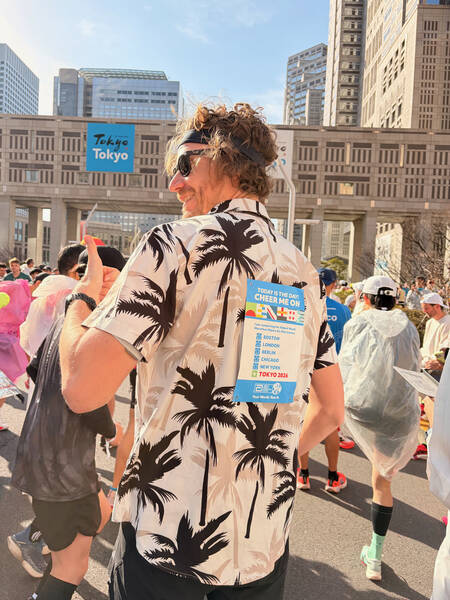
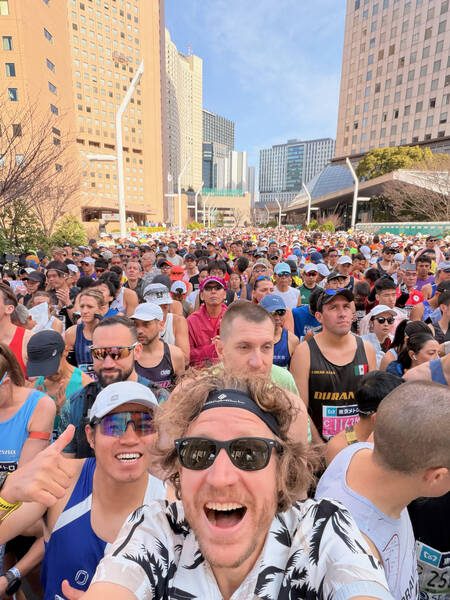
Before the start, there were a few short speeches by officials, all very plain and non-dramatic. That’s been the whole vibe here, waiting in the starting block. I could sense some nervousness in the runners around me, but emotions weren’t through the roof here as in other races. We’re in the second starting block of many, because I think I mentioned during the registration process that I might run around 3:00 hours flat. The 3:00h and 3:10h pacemakers were hanging around here. But because my time goal had shifted, I positioned myself near the end of the block, right before the line separating us from the people in Block C. There was enough space, nobody could have jumped the fence as is tradition in the in chaotic Berlin Marathon starting blocks, everything was orderly and neat. Much better. I was ready to go, with my easy goal pace of 4:30 min/km or 7:14 min/mi on my mind.

🎊 Tokyo Marathon 2026: START!
The wheelchair athletes took off first, followed by the professional foot runners. Confetti cannons and two cool steam emitting tubes made it feel big. While the all-white confetti rained down on us, the announcer introduced us to Mister Marty Friedman! They had built a special stage for him. In case you’re not familiar, Marty Friedman used to be the guitar player for metal band MEGADETH, often named as one of the big four metal bands which include Metallica, Slayer, and Anthrax as well. Why was he here? Turns out, the American guy just happened to fall in love with Japan decades ago and decided to stay. He became fluent in Japanese and is some sort of cultural icon in the country now. People love him. So for every Tokyo Marathon start, he is asked to go on stage and shred on his guitar to send all runners off onto the course. I found this lovely.

The moving of the starting blocks towards the starting line happened so well coordinated by the volunteers, I was in awe. It seemed like a dance of sorts, how they rolled up the cord separating my Block B from Block C right behind me in unison and guided us towards the starting line at the exact perfect speed so no congestions would arise. They really took their time to practice this!
This made for a super smooth transition for us all to get into the slow jogging mode, and then, almost exactly when crossing the starting line, into our individual marathon paces. I started slightly slower than my planned average was going to be, just to ease into it better.
It always feels great to finally start a marathon race. Especially if you’ve been anticipating it for so long. Everything that had to happen for me to stand here and run the actual race crossed my mind. In this moment, it was mainly the long trip here, crossing continents. But also the months of training before, and the years of trying to get a slot for this particular race. Going back to the first time I vaguely thought about doing the six Marathon Majors including Tokyo, which must have been around ten years ago now.
All of that time leading up to this moment, me starting the Tokyo Marathon 2026. Moments like these are super special to me and worth all the time and money invested in it.
🏙️ What It’s Like to Run the Streets of Tokyo
Firstly, the streets are in absolutely perfect condition. There’s been not a single pothole I think. It’s completely flat and easy, really well maintained, and crowd control is done like lives depend on it—which is actually true sometimes.
The first bit of the course leads east, from the Shinjuku district back towards the city center. Here, we have lots of skyscapers draped with colorful advertisements and the beautiful looking Japanese letters. The streets are wide enough for everyone to have enough space.
All in all, it makes for very comfortable running. You can fully focus on yourself.
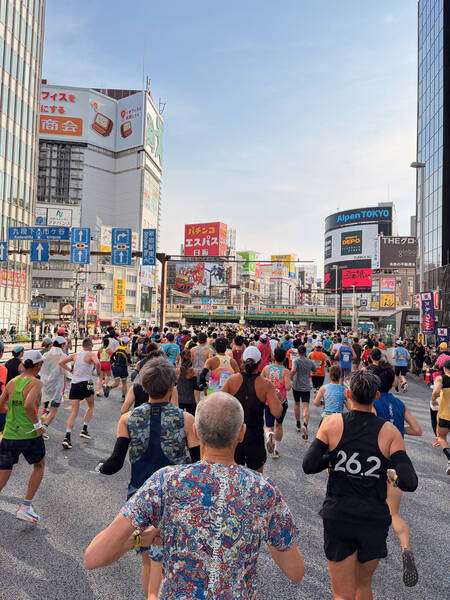


For many runners, including me, the starting line adrenaline and nervousness wears off during the first few minutes. At this race, it was after completing the first mile that I was suddenly overcome with emotion and had a couple tears in my eyes. At events which are very special to me, this happens. I get overwhelmed with gratitude for being able to be here and run this race, for everything to have fallen into place just as I wanted to.
The unplannable thing is when exactly that moment of overwhelm would appear. I can’t control it, of course. At Boston Marathon I felt it, too, but that was about a minute after the finish line. And, oddly enough, at New York City Marathon I was emotional a few minutes before the guns went off, while walking towards the starting line. Now here, one mile in, my weird human body decided it’s the right time to produce some tears.
A minute later that feeling is over and I’m smiling from ear to ear again.
Over the next few kilometers, I am surprised when looking at the watch and realizing that today’s natural marathon race pace turns out to be a bit quicker than I planned. I feel really good and my heart rate confirms that feeling. The new shoes are doing their thing, too, being all light and bouncy, pushing me forward. And on these wonderful flat roads, nothing at all is holding me back. I’m rolling, flowing really. Japan makes it very easy to do that.
🍹 The Tokyo Marathon Aid Stations and Amenities
There were a total of fifteen aid stations between kilometers five and forty. Never more than three kilometers between two. All of them had water and every other one offered a sports drink that contained sugar and electrolytes. It tasted great and as if it had enough of the promised nutrients in it, but the name was a bit unfortunate. It was called SWEAT. Well yes, it’s supposed to replace sweat, but don’t name it that!
At the later aid stations, a whole variety of odd Japanese foods were offered. To prepare us for it, they had included information in the digital guide about exactly which ones were available at what spot.


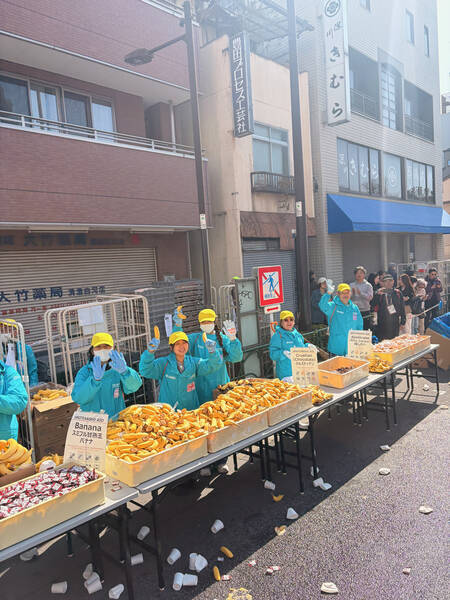
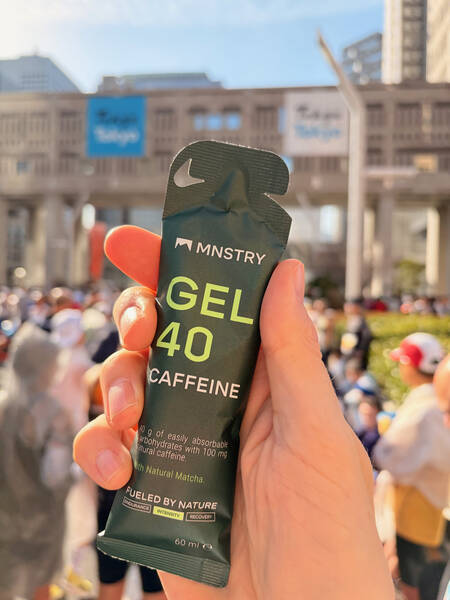
I don’t think there was an option to try them at the expo and I was unfamiliar with all of them. Most looked heavily processed. For a marathon race, this seemed very risky to me. Anyways, I had brought my own gels and didn’t have to rely on any food offerings. Currently I love the German brand MNSTRY for gels, and funnily enough their caffeinated gel option contains matcha—so there’s the Japan connection again.
For my taste, the aid stations were good as they were, but could have been better had they offered some plain gels at some of the later spots. But I saw no gel sponsors. The closest thing were some glucose drops, but they seemed a hassle to get out of their double plastic packaging and would needed to be chewed. So there’s room for improvement. I finally found some.
Between the long numbered tables at the aid stations they had rubbish bins. The whole race has a strict no-littering policy. No dropping of your own gel packagings anywhere except for these bins. And not into any bin, please, garbage has to be separated while running. Cups into the blue ones, everything else into the white ones. I got the hang of it very soon and didn’t think this was a problem at all. It could easily be adopted into all the other races. In fact, I would appreciate it if it were. Those mountains of plastic cups we usually have to climb over at aid stations were just not happening here, it was reduced to a minimum.

Then, the porta-potty stations. Wow, this was done so well, Tokyo Marathon again played in a league of its own here.
I don’t need to mention that public urination was absolutely unacceptable here. Also, it wasn’t really possible because of portable fences on the sides of the course. So the staff had to come up with a solution. And that looked like the following. Volunteers were holding up signs with a restroom mentioned on it and the distance to the next available one, never more than a couple kilometers away. At these places, the fenced in course was made to have a sort of highway exit for runners who wanted to make use of the opportunity. That exit was just a couple meters wide and lined with volunteers showing the way. You would have to run for a couple dozen meters into the driveway of a department store or similar, where a couple dozen porta-potties were waiting for you. Once done, a separately fenced path led you back towards the course where you were faded into “traffic” so smoothly, no one would even notice.
It was simply beautiful. A majestic way to solve urination and defecation in privacy for every marathon runner. Tokyo, I bow to thee.
Everything was so clean and tidy, that when I came by a traffic cone that had tipped over in a line of perfectly aligned cones, I couldn’t help but spontaneously stop mid-race just to put that cone up again. I heard some people making sounds of appreciation when I did so, because it was in a position volunteers couldn’t reach.

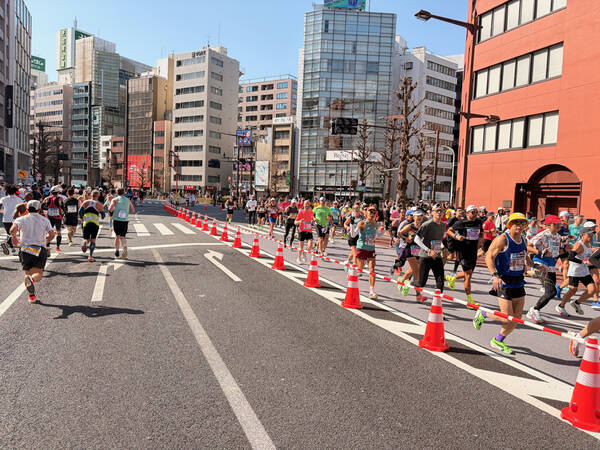

I’ve heard people say that the whole country of Japan seems to suffer from OCD, but this just a way to make yourself feel better when you see how much they have everything under control. Enjoying a neat and tidy place isn’t OCD, many people have started to confuse that. I liked this a lot and organized my own stuff at my hotel room super cleanly, being heavily influenced by the situation here in the city, as opposed to the mess I usually create.
🔍 But What Was Missing? What Didn’t Go So Well?
You’ve heard me rave about this race now for a while. But there were two major things I didn’t enjoy about the race so much. The lack of diversity and the lack of crowd support.
Unfortunately and obviously, these can’t be as easily fixed as putting a few thousands energy gels on aid station tables. And that even assumes that people would actually want to fix them.

🌍 The Lack of Diversity
In my personal opinion, a race that brands itself part of the WORLD Marathon Majors should aim to take pride in bringing the whole world together. That’s easier said than done, especially when the hosting city has just 5 percent of inhabitants from all over the world, as opposed to about 30–35 percent in the other Majors host cities. I’m a big fan of diversity, I think it makes everything better. Here, just from the visuals, I would guess we had about 60–70 percent Japanese folks running, which is fair since we’re in Japan, but the remaining 30–40 percent were Westerners. Europeans, Americans, probably a few Australians. There were like three Black people. And about as many who looked like they were from the Middle East or South Asia.
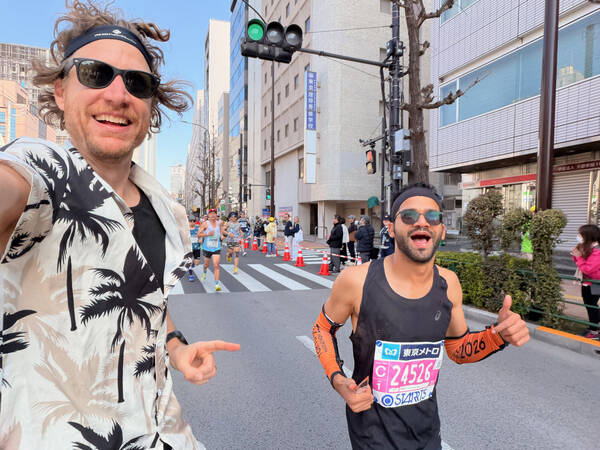
Needless to say I realize this has to do with the privileged situation us Westerners often find ourselves in. It’s not as easy to become a Tokyo Marathon finisher if you were born in rural Uganda into a family of farmers, for example. The big resulting question is, how can this be improved? I think there are a few things which could be done. For example, making the entrance fees dependent on where the applicant is from. A bunch of international races do this the wrong way, they ask more money of foreigners than they do of those born locally. But tied to the local median buying power of the applicant, it would become more fair for everyone. Of course this still leaves the high cost of travel. But we’re moving out of scope here with this chain of ideas.
In the end it comes down to making the whole world a more equal place with wealth accessible to as many people as possible and distributed all over the world. Is that a vision we can all get behind? I’m not so sure but I’m in favor of it.
In an ideal world, the huge World Marathon Majors would reflect all the world’s peoples and be a huge celebration of all the cultures and the sport of marathon running as well. I think in the latter aspect there has been a success story hidden inside the Majors, and that’s how running brings everyone together. As exotic as Japan is to me, a European, running marathon races is still something that we’ll always have in common. The traditions, the language, the food, everything may be different, but our love for running remains common ground. That’s beautiful.
While we have a long way to go to fix the lack of of diversity aspect, the next issue may have more potential.
👏 The Lack of Crowd Support
I paid special attention to this aspect of the race. Friends had told me it might be the case and they were right. The Japanese looking crowds were mostly quiet and respectful along the fences of the race course and so the stereotype was confirmed. Of course if this is a bad thing depends on your own preferences during a race—I have a few runner friends who love a quiet race—but for my own personal taste a Major has to feel like a big party that brings the whole city (and world) together to celebrate enthusiastically. At the three races in the US, as well as in London and Berlin to a slightly lesser extent, that was the case. But here, in Japan, the spark just didn’t light up.
Crowds were scarce. If they were standing in two rows at the fences, that was already a lot. Some stretches were empty. And when you actually heard people screaming and cheering, it was the ones from abroad, usually, recognizable by the language they were shouting in. Not many funny self-made signs were held up, as well. Every once in a while, we came by a cheering spot that seemed to have been organized by a company, whether it was a sponsoring one or unrelated—but those folks made some noise. They were usually all wearing the same outfit, like branded yellow jackets for example, and it seemed like the cheering was rehearsed.

The volunteers, especially at the aid stations, though, were super cheerful. They were waving, smiling, advertising their free giveaways, clapping—a great performance. It also seemed to be rehearsed, though, to be honest. Fair, they put in the effort and it’s much appreciated, but I have to say it sometimes felt a bit hollow or sterile. It didn’t come directly from the heart, and I felt that. Again, it’s fine. You can’t ask anyone to feel a specific feeling. Either they do or they don’t and that’s okay. Just when comparing this to the streets of New York, where you couldn’t even hear your own words, had to laugh at dozens of funny signs nearly all the time, and the many rows of spectators were all holding out their hands in the hopes of getting as many high-fives as possible, it just showed a big contrast.
The upside of this Tokyo feel is that you could fully focus on your own running. No distractions, at least mostly.
📈 How My Own Race Developed
As stated, the plan was to do an easy long run two weeks before my main attempt at a new personal best in Barcelona. From the data, 3:15 hours or a pace of about 4:30 min/km (7:14 min/mi) would be a smart result.
Before the race, my mindset had shifted a bit, though. And during the first few kilometers it shifted by a lot. Training for a new personal best hasn’t been going great in January and February due to the unusually harsh winter conditions in Hamburg. And while my fitness improved over the weeks and I managed to pull off a solid half marathon result in London on January 19th, averaging 3:58 min/km average (6:23 min/mi) over the whole distance, my goal to run that pace exact consistently over the full distance in Barcelona had already slipped away.
Then came the awesome new shoes I bought just two days ago. They felt so great and fast, probably the best racers I’ve ever had—and I’ve owned quite a few over the years. And with the conditions so favorable today and the perfect streets and aid stations, I thought I might as well turn up the speed a bit more!
No boring and easy, safe long run. Let’s see what the heart rate says and do Tokyo properly. On the other hand, I didn’t want to go fully all-out here, because that would have made enjoying the race really hard, and I wanted to take pictures and videos, breath the unusual atmosphere, talk to a few people next to me and think about what I’m experiencing instead of watching the pace and heart rate all the time as closely as possible.
That’s why when I landed at a 4:20 min/km average (6:58 min/mi) after a couple kilometers and my heart rate stayed at a comfortable 82% of my maximum, it felt like the sweet spot for today and I decided to keep that up and see how long that’ll work out. And it just kept on feeling good.
My heart rate stayed between a comfortable 82 and 85% until about the 25 kilometer mark (15.5 mi), where it plateaued at 85% for a long time before going into a final drift over the final twenty minutes of the race to 88%. My total average heart rate was at 83% over the 42.8 kilometers I’ve tracked on my watch. Putting down this very sustainable effort, in combination with the flat roads, fine weather, and fast shoes, it translated to the mentioned 4:20 min/km average across the full distance. No outlier kilometers, super steady. Early on I ran by the 3:10 hours pacemakers and a bit later I passed an unusual walker who paced 3:07 hours. It looked like the Olympic walking you might be familiar with.

In the end I reached the finish line after 3:05:13 feeling great. Strong, no hurting, a bit tired but not destroyed at all. And with so many new photos and videos on my phone! It’s been a big success.
Talking about the athletic performance some more, I think with an all-out effort I would have maybe managed to go 2:58 or 2:59 hours today. Ir wouldn’t have been pretty and I’m glad I didn’t. I went over all the numbers and data later, especially comparing today’s result with my personal best from the previous March, just about one year ago, where I ran a 2:55:47. At that race, I reached a 85% heart rate after the first few kilometers, drifted to 90% from 25–31 kilometers, and stayed just above 90% during the final 10k. That all-out effort last year averaged 87%, compared to the 83% of today.
Looking forward, I think with some proper recovery and a couple race pace activating sessions over the next two weeks, I still stand a chance for a personal best in Barcelona on March 15th, two weeks from Tokyo, but I’m far off from the 2:48 hours result I wanted to pursue initially. With some luck regarding the conditions, I might have a 2:53–2:54 hours result in me. That would make me really happy.
Back to Tokyo, though.
The race course mirrored my steady pace perfectly. There wasn’t much variety over the 42.195 kilometers. It stayed flat and fast and clean. At some point the famous SkyTree came into view.

Later, a shinto shrine with a ceremony in front caught my attention. The shape is so distinct it has its own emoji: ⛩️
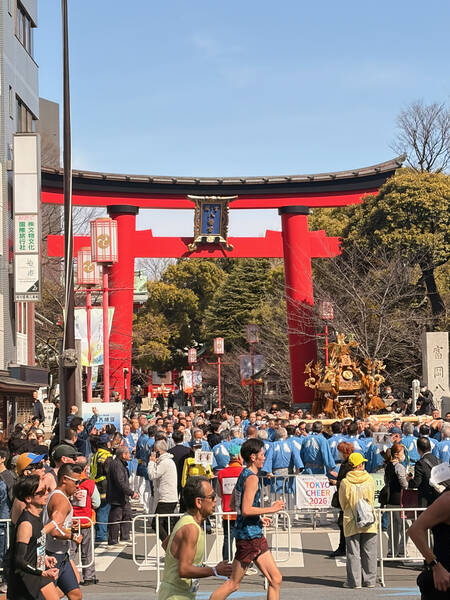
Many buildings were very beautiful, but naturally you’d also have kilometers lined with grey and brown-ish apartment buildings.
When seen from above, the course layout immediately reveals its four sharp 180 degree turning points. Some people like to complain when races include these, I don’t mind though. Those few seconds that are maybe lost don’t matter to me. Seen as milestones to reach and pass, they can even be of psychological benefit.


Precisely at 37.2 kilometers, a 5k left, the local parkrun crew was cheering. You could see they consisted mostly of Westerners. The movement is from the UK and I have recently joined in on the fun and did a couple of parkruns, which are free timed 5k races that happen every Saturday morning. All over the world, meant to attract people of all paces to bring runners together. My plan to do yesterday’s parkrun as a shakeout didn’t come to fruition though, because the closest options were just too far outside the city center for me. These joyful runners here were great at cheering and they had positioned themselves strategically in order to be able to hold signs and scream “Now it’s just a parkrun to go!” meaning five kilometers left, I had to laugh and give some love back to those folks by smiling and waving which they greatly welcomed. I must be part of a minority there.

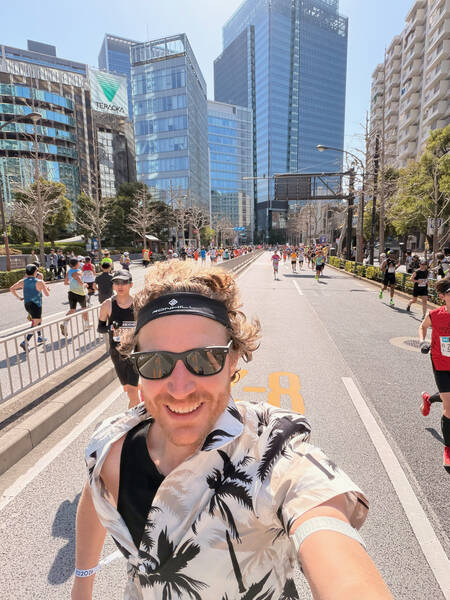

Quite late in the race, we passed by the famous Tokyo Tower, another landmark considered to be so important it has its own emoji: 🗼
I was already familiar with it from playing the Tokyo course on Mario Kart against my daughters on the Nintendo Switch a lot. Good times. Currently, the second one of my four daughters is sometimes able to beat me, the others still have a lot more practicing to do.

Very close to the end of the race, a rare cobblestone passage started. Friends had warned me about that one, but there was nothing to be worried about. The stones were laid out perfectly flat with no gaps. I might not even have noticed if I hadn’t looked down. Maybe when it rains they become slippery, but it wasn’t an issue today. Time to enjoy the final few hundred meters!

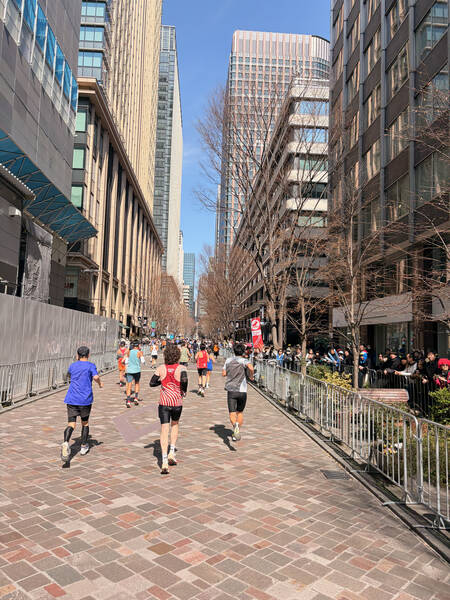

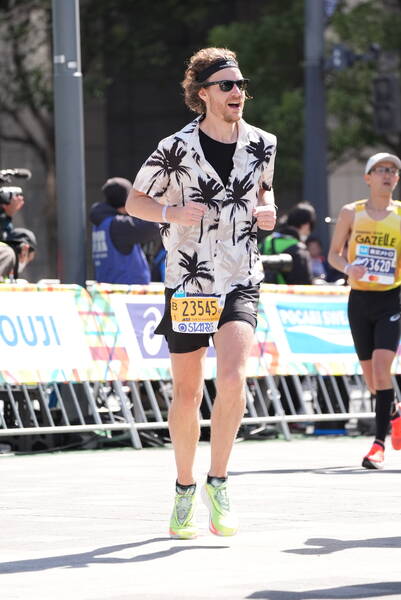
The crowds ever so slightly increased here, but still it’s been empty. The amount of runners crossing the finish line together with me right now was certainly larger than the amount of spectators hanging around in the area.

Gate in view, no finish line sprint needed—or so I thought—and happily I ran over the timing mats of the 2026 Tokyo Marathon, effectively becoming a Six-Star Finisher at that exact moment.
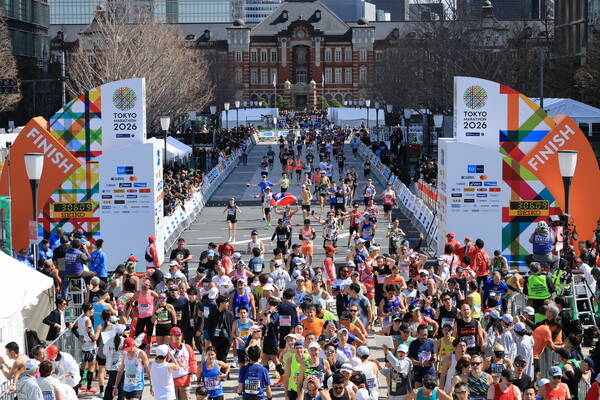

🏁 The End of Tokyo Marathon 2026
Stopping the watch I saw the result: 3:05:15 with an official result of 3:05:13. Although ten minutes faster than what I wanted to run this morning, had I taken just one look at the total time during the final kilometer, I surely would have tried to sprint to Sub-3:05h but it really doesn’t matter. The finishing time today is good as it is, I’m not disappointed at all.
And after all, that’s not why I’m here. I’m here to finish the six World Marathon Majors and that I did.
But immediately after that first post finish line high the buzz is killed by the crowd controlling volunteers. Around 5–10 guys were standing here, shouting into their megaphones that we were supposed to keep moving and not take any selfies. Oh crap, busted.

That’s a sure downer. Next, big signs pointed us into the correct post-finish direction. I wasn’t sure if my bib was orange or golden, it sort of looked the same. A volunteer helped. They had nearly ten different colors which were used to divide the crowds up into smaller chunks at several junctions forking out.
A masterclass in crowd control, really. I could see why this race was among the only ones in the world that didn’t need to be canceled during the pandemic.

Like herded animals, we were then led to the medal handout stations. Again, a huge amount of friendly volunteers smiled and dutifully presented us with our medals. No hanging around the necks though, I think that would have been too much of an invasion of personal space for this culture. Handled with lots of care instead.
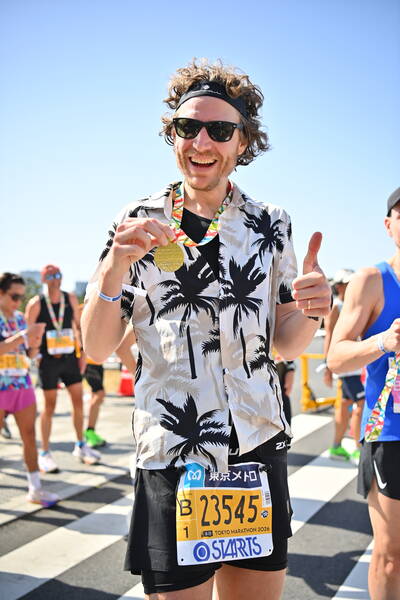
The post-marathon high is big today for me. I really enjoy it and none of the disciplined over-organization here can take that away from me right now.
Following the stream of walking runners, next up are the water, SWEAT electrolytes, and banana stations. Neatly one after the other with a bit of walking between them to allow for sorting yourself out. Right before we get anything, volunteers hand out plastic bags so we have no trouble carrying our individual selection of giveaways. I am not surprised that they thought of every little detail here.
The tiny water bottles are limited to one per person, and that’s not so great. I’m super thirsty and surely not alone there, so that definitely has to be improved.

Walking down the long road we are allowed to collect some more goodies to put into our plastic bags. First, some candy and recovery mixtures, but later on bath salts and even full packages of laundry detergent. Weird, but I guess it’s related. My current clothes surely are stinking now.
Aluminum space blankets were offered as well, but the warm weather didn’t require it. Instead we all got a branded towel with a hood. That was a great gift, although I’m not sure under what circumstances I’ll be wearing that at home.

After some more walking along the fenced-in area with a big smile, I finally spotted the last handout booth. Full with volunteers wearing the deep blue colors of the Abbott insurance company. The one that sponsors the World Marathon Majors. This is the place I’ve been longing to one day walk through, and now is the time.

As the walking path is again divided, the standard finishers to my right realize I’m about to bag that big medal and congratulate me. And there it finally is.
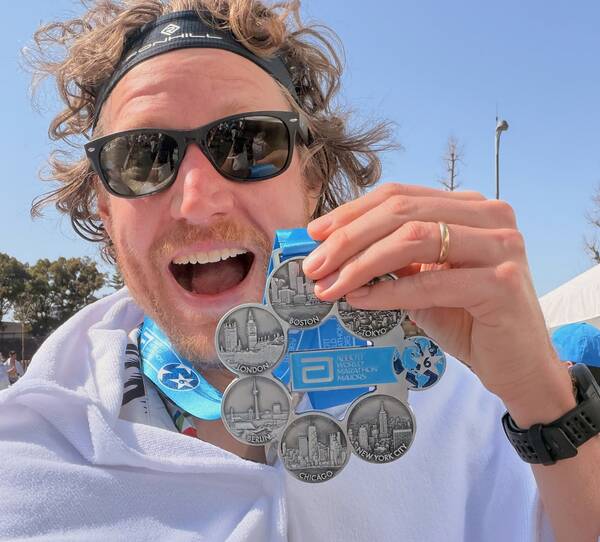
Big smiles, lovely volunteers, some more congrats from the other runners. The next step is to take the official photo of me wearing the newly earned medal. But a guy is in front of me having his picture taken so I have to wait. No problem, I’m over the moon now anyways.
Then I take a closer look at what’s happening there. The guy in front has a sanctioned spectator with him, possibly his wife. And she is handing him what looks like some more of the huge Six-Star Medals. What? Some volunteers and I lean in closer to see what’s going on. Then someone says: The guy has just completed his FORTH total full Marathon Majors set! His supporter handed him his previous three medals and now he has his picture taken wearing four of them. That means he has finished at least TWENTY-FOUR Marathon Majors so far. Unbelievable!
No matter how big the achievement you’re unlocking, there’s always someone who’s done it before. Three more times. 😂 What a legend. I searched a bit for him afterwards and found out his name is Tom and he’s actually from Germany like me and a deaf runner! And a very fast one, too. Some people are just doing stuff beyond imagination.
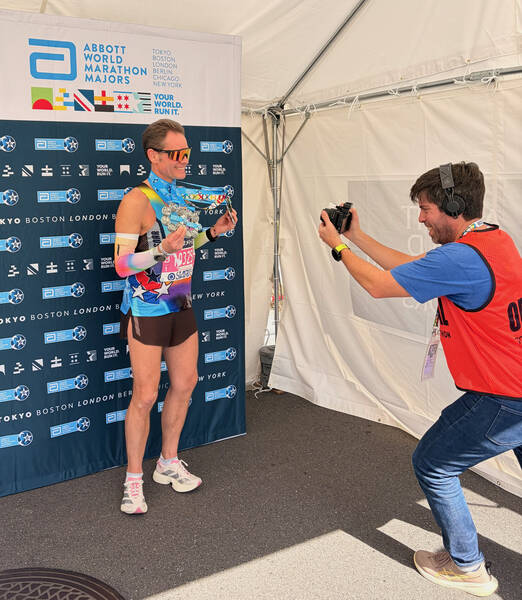
It doesn’t shrink my own happiness about my achievement today at all, nor does it make me want to pursue getting four of those medals like him. I’m just very happy for him. After he’s done with the photographs, it’s my turn.
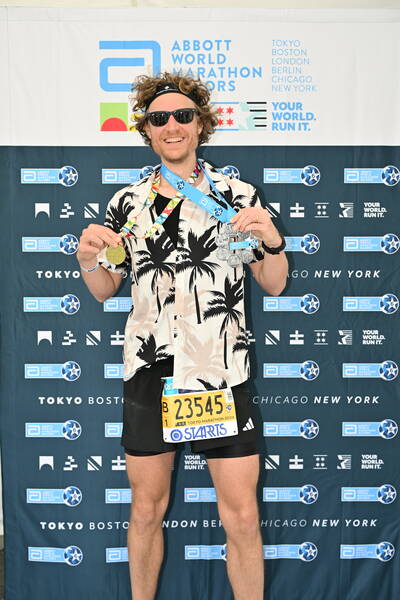

Now, we’re led along the gated area and soon split up by individual bib colors a few more times. I don’t really pay attention where we’re going, it’s not like I have a choice or anything better to do anyways. Walking the Tokyo streets is good as it is. It takes a while though, it feels like we’re moving far away from the finishing area. During the long walk, about three people recognized my new huge medal and congratulate, all of them Westerners.
The volunteers guide us across traffic lights and keep holding big signs pointing towards the baggage reclaim, not unlike at an airport. Of course, the security-checked stuff I handed off in a bag at the start line needs to be given back to us next. When it’s time for that, me and my fellow orange bibs are welcomed near a business-y looking skyscraper by another army of volunteers. A wonderful old Japanese lady hands me a little Origami and says she made enough for all Six-Star Finishers. That’s so cool! And I was talking about the lack of crowd support. It’s just a different kind of support!
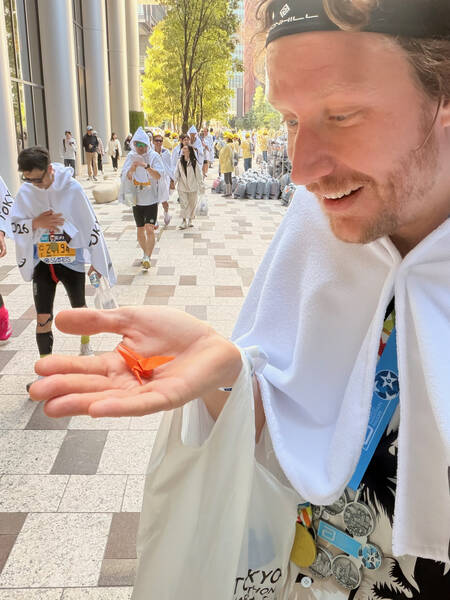
We’re then led into the super clean and classy building. The paths we’re guided to take are all taped with plastic so no dirt and sweat will ever touch the expensive floor I guess.

We enter what looks like a conference room just without any furniture in it. That’s one of the dozens of changing rooms. I don’t know if females and non-binaries had been separated from us males during the march here but it looks like it’s just men in this room, sitting on the plastic-wrapped floor, changing clothes.
Sitting down, finally, this is the first moment to take a real breath. We weren’t allowed to sit down or stop walking since the finish line, and an hour must have passed since then. I hold my medal in my hands. Wow, what a day. Firing on all cylinders for hours, but now it’s time for the deserved break to reflect.

💔 The Post-Race Blues
After about ten minutes of changing clothes and even lying down for a second, I decide to leave the conference room and make my way outside, back into the city. I was longing to walk around freely, without fences left and right. And right when I set foot on the pedestrian pathways next to the building’s exit, it’s just empty. The city center is far away and suddenly the marathon race seems like it happened on a different planet way back in the past. The sun is still shining, but there’s just nobody around apart from a few people going about their normal days.
This is new.
Where’s the party? The frantic fans? The free beers? The goodies, the strangers congratulating each other? The selfies with new friends made along the course?
There’s just nothing. We’ve all been divided apart by bib colors and led far away from each other, to find ourselves in the middle of nowhere, removed from the action. I quickly check Google Maps and it reveals that the walk back towards the finishing area would take twenty minutes from here. Or a subway ride. What? Where am I? What is this? When booking my hotel I paid close attention to the location of it: ten minutes from the finish on foot. Now that doesn’t seem to have worked out, does it.
What an abrupt ending this is.
I need to switch gears mentally, because I was expecting this to feel different. So there’s no party, nothing. No option to hang out at the restricted area that they built around the finish line. So I might as well start my walk back to the hotel, but I decided to take the route that leads me along the course. Maybe some of the atmosphere I was longing for can be found there. I cheer on a few of the people coming by the 33 kilometer mark here. About three more people who are walking around congratulate me on my finish, all Westerners. And some of the volunteers, of course. They were briefed.
So yes, the vibe was slightly off, especially here after the finish. Compared to the other Majors, especially those in the United States, it’s been a real downer. I realize now how much I loved the party around Boylston Street in Boston and the crowds at Columbus Circle near Central Park in New York City after the finish. Everyone was chipper, they asked my finishing time, I high-fived so many strangers, it just matched the energy. Or in Chicago, where they had taken special care to build a finish line village for the runners, named it the 27th mile, with free food and beer and lots of booths. Live bands were playing even. We could just sit down on the meadow and take it all in right there, for however long we wanted. Chicago did this really well. Tokyo, on the other hand, receives a clear last place in this regard.
Which brings me to my overall Tokyo Marathon review.
💭 Tokyo Marathon Reflections
I tried to paint a round picture here for you, emphasizing all the positive and negative aspects of the race. In the end it’s very personal what you value higher and lower than others. For me, if you ignore the lack of crowd support and post-race party, it would have been a 10/10. Flawlessly organized, perfect course conditions, aid stations, volunteers, friendliness, everything was amazing. I mentioned the lack of diversity in the field of runners, but I won’t hold that against the marathon. But the odd crowd support and the weird post-race management that made me feel like I’m an animal to be herded away and neatly put back into its hotel room take a chunk out of my rating.
In total, a solid 8/10 remains.
This also led me to rethink the experiences I’ve had especially in the United States. In retrospect those were even better than I thought they were at the time.
↩️ Would I Come Back to Run Tokyo Marathon Again?
Honestly, probably not. Even if it were as easy as just buying a race ticket as in normal races. It’s a good race, even quite suitable for a serious attempt at a personal record, but I value the full experience of a race, including post-race. The country is lovely though and I really enjoyed spending time in the city and exploring everything. As a tourist, this is heaven. It’s all easily navigable, people are nice, there’s no crime, nature is amazing, and the rich culture has so much more to offer than I was able to see here. Not to forget the incredible food! Coming back to Japan for a few weeks would be great. And I’m sure I’d enjoy a long trail race somewhere here a lot, too. Those usually don’t have much crowd support anyways.
But the marathon, with everything that’s required to make it to the start line, doesn’t make me jump in excitement. It’s great and I’m still glad I did it, because having the full set of Marathon Major experiences rounded off my own picture a lot more. It’s just not a race I’d do again in a heartbeat, like Boston and New York City clearly were. Even Berlin, because it’s so close by. Also, I’d love to do London again. And thinking about the finish line party, probably even Chicago. Okay, so that leaves Tokyo as the only one I wouldn’t repeat. I guess that’s a harsh statement and I feel a bit bad about it because so much effort and care clearly went into it. But it’s just how I feel and again, it was a good race! Standards are just super high when you’re talking about those races that branded themselves to be the greatest six in the whole world.
And while repeatability is a good indicator of how great a race was, it’s not the only one. Shortly after the race, I had built my personal Majors ranking in my head, and Tokyo did not come out last.
🔬 World Marathon Majors Reflections
Having now completed the full set and with most races still quite fresh in my memory, I feel like I’m in the position to create a ranking. Just for fun, of course.
Position 6 out of 6: 🇩🇪 Berlin, Germany
Being from Germany myself, I would like to see my home race higher up on the list, of course. But compared to the others, it just isn’t. The quality standards are so high, you have to go above and beyond as the race organization, or you’d have to offer something completely unique in order to stand out as a Marathon Major. Berlin is a good race. It’s fast, it’s fun, the city has a lot to offer and the crowds are into it. There’s quite a bit of chaos, too, though, especially in the starting blocks. Not enough volunteers. And lately, some questionable decisions regarding the aid station offerings (who in their right mind would get rid of proper electrolyte drinks?).
I’ve contemplated this before, especially during Chicago Marathon: Why are some races included in the Majors and some others which seem they should be, aren’t? Instead of Berlin I would have preferred Paris, for example. Or the classic one from Marathon to Athens, Greece. Berlin is still a good race and the only one of the Majors I did twice. Because it’s just a short train ride away and the lottery odds are among the best of the bunch. And because it’s a fun race, too.
Position 4 & 5 out of 6: 🇬🇧 London, UK & 🇺🇸 Chicago, USA
I did London over ten years ago and Chicago just eighteen months ago, so my statement here probably lacks some insight. I remember both races to be great and I don’t think there has been anything that diminished the feeling. It’s hard to choose between both. I mentioned Chicago’s awesome finish line party, but the race course was also amazing. Flat and fast, lots of space, even quite diverse. The whole city transformed into a marathon party. I went into the race without much of an expectation because Boston and New York had already blown my mind, and I was still pleasantly surprised.
Then London, one of the centers of the world. I just am a huge fan of the city and try to make sure to visit it at least once per year. The international buzz, the history, the English people especially, and oddly enough I even like the food. The race took us through some relaxing green parts before showing off all its most famous sights. I remember the goosebumps I got when we crossed Tower Bridge. Running towards Big Ben and finishing on The Mall near Buckingham Palace was also so special to me. I have kept signing up for the lottery each year but lost and lost and lost. Over one million people tried to get into the 2026 race and I am not surprised. When I will have finally run London Marathon once more, I might put it ahead of Chicago, but for now both races were just so good I’m not sure.
Position 3 out of 6: 🇯🇵 Tokyo, Japan
Despite all three previously mentioned races being so good, Tokyo comes out ahead of them for me. You heard my post-race blues thoughts and the few negative aspects, but all in all this was a great experience. Everything that’s done well here just outweighs the negatives for me very clearly. It also offers a much needed diverse perspective compared to the other five Majors, which are all dominated by Western culture. I especially liked how convenient it all was. The short subway ride to the start, the disciplined army of volunteers. The little quirks such as metal guitarist Marty Friedman shredding at the start line. Just nothing went wrong, nothing was annoying. And the road conditions are number one of all the Majors.
Position 2 out of 6: 🇺🇸 Boston, USA
It almost seems blasphemous to put the oldest marathon race not in first place here. Going on since 1897, started right after the first Olympic marathon race of the modern times, you can say this one here kicked off the whole thing. I’ll be eternally grateful for that, because the existence of marathons changed and improved my life so much. And Boston put up such a show! There’s the long and uncomfortable bus ride to the start line, the unpredictable shivering cold or blistering heat of the season, and the quite tough course profile with its quad-killer downhills at the beginning and the world-famous Heartbreak Hill in the final quarter of the race. But everything surrounding the race is what makes it so special. The crowds, especially during the Wellesley College Scream Tunnel and the Boylston Street finish need to bow to no one. It also seemed like the whole city celebrated the race as each year’s main event. Not like just another thing that’s going on in a ten million mega metropolis. Boston is great and I can only recommend everyone who loves running to try and make it here once.
Position 1 out of 6: 🇺🇸 New York City, USA
It just has to be number one. It’s the race that’s on so many people’s bucket lists, and rightfully so. New York’s vibe can’t be described, it has to be experienced. You have to walk the streets of Manhattan or strolled through Central Park to get it. To me, it always feels like I’m at the center of the whole world when I’m in New York City, and I’d like to come back here as often as possible. The cost is an issue, though. Those $18 bagels don’t pay for themselves. Not to mention the hotel prices. That race, though. The course is tough with it’s bridges and rolling profile, as well as often windy conditions, but the routing leading through all five boroughs just present the city like no other could. The whole world is here, and not just for the race. You come through a neighborhood full of people from Ghana waving their flags hitting drums and singing, and a few hundred meters later you’re suddenly in Little Italy or Chinatown. Or surrounded by Columbians. And everyone is celebrating in their own way. It really shows how the world comes together because we love running. We’re all born to run, it’s the common denominator. No other place shows this as impressively as New York City.
And even though the city is so huge a 60,000 participants marathon race is just one event among the other countless things happening at that same day, it seemed to me the New Yorkers see it as the main event.
My verdict: If you can only do one of the Majors, try and come to New York.
And if you’re also on a Six Star journey like I was, choosing it as the final stop might be the most rewarding way, too.
📌 But Is It Worth It Pursuing the Marathon Majors?
I think so, yes. It’s a privileged thing to do and requires lots of commitment, for sure. But if you’re into marathon running and traveling, and can afford the long trips, it really is a lot of fun and super interesting. I don’t regret this at all, the contrary. I’m really happy I went on this journey. The experiences have each felt like worth more than the loss of money I had to spend on them each.
If I had the option I would have preferred to spend more time in each city and taken the whole family each time, but that wasn’t possible in our situation. Not complaining, those solo trips also had their advantages: I was able to fully focus on immersing myself in the city and just do whatever I felt like doing without taking other people’s needs into account—a welcome break from life at home with my five ladies and the new dog.
You have to make most of it, is the bottom line.
🗺️ And What About the Additional New Marathon Majors?
Three new ones are supposed to join the six, with one of them having already had its Majors debut last year, 2025. That’s 🇦🇺 Sydney, Australia. Although the journey is about as long as it could get from central Europe, I’d still like to do the race one day. The Australians are supposed to love sports and the iconic city also draws my attention. And I have already lost twice at the lottery for a race ticket, so the tradition continues I guess! Let’s find out how many more years it’ll take.
The two other hopefuls are 🇨🇳 Shanghai, China and 🇿🇦 Cape Town in South Africa. Both of which I would love to do. Because of family ties I’m already very familiar with Cape Town and have been there many times, but never ran any race in the country. I’d love to. And China in general just increasingly fascinates me. If they come up with a new Nine Star medal one day, I’d like to pursue that one, too.
My friend Guy says not to think about these moments as goals to be reached but as milestones to acknowledge. The journey always continues.
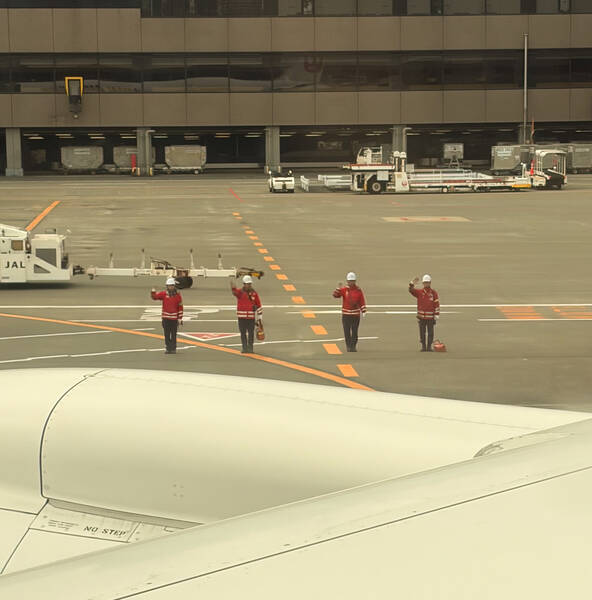
How do you feel after reading this?
This helps me assess the quality of my writing and improve it.
Leave a Comment