What It Takes to Host a DIY Ultra Running Race – Part 2: BremenSanktPauli 100
For BremenSanktPauli 100, we went all in. The people who signed up should receive a great racing experience for their fees. Here’s how that went and what we’ve learned.
Published on 1st of December, 2025
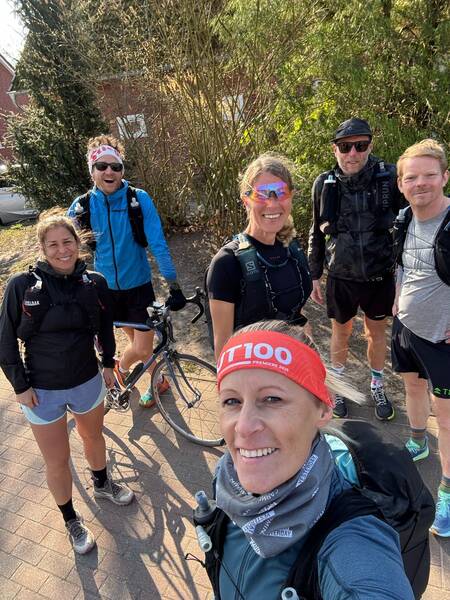
Welcome back to Part 2: BremenSanktPauli 100!
In case you missed the previous post of this two-parter, it’s here and it dealt with the Munich Breweries Ultra, a race my friend Nico and I started in 2021 and which was joined by about 50 runners for the 5th edition, taking place in May of 2025. Find out more and sign up for the email reminder service at munichbreweriesultra.beer. Now, let’s continue!
🏴☠️ BremenSanktPauli 100 – An Ultra Race From City to City
The differences between a guided group run in a big city and a 100 mile race from a big city to another big city are major. The biggest consequence is that people expect something in return for their entry fees when they sign up for a race, even when it’s not-for-profit and hosted by people who love running but are no professionals. The level of responsibility you as the organizing team feel is therefore a lot higher. The pressure is on. You need to deliver.
The advantage for me and the team I’m part of here is that I live close to the race course and not about 800 kilometers away, as opposed to the Munich Breweries Ultra. The network of friends who can and will help is a lot bigger. We can plan the race course and test run all parts of it a lot more easily. We can meet up in person and talk through important points.
Also, our core team has been a lot bigger than for Munich, where it’s basically just been Nico and me. For BremenSanktPauli we were lucky to have Judith Havers, who sorted out that the race shirts would be taken care of by the friendly people at the FALKE company, Maiken Liß, whose friendly and no-nonsense approach was detrimental to all the aid stations coming together, Till Stehn, who checked the route a bunch of times, as well as Nina Witschonke, who took care of the graphic design aspects and managed one of the aid stations despite having the race of her lifetime coming up just a few days after. All of the above also played an instrumental role during the race day itself in helping to make it all go over well.

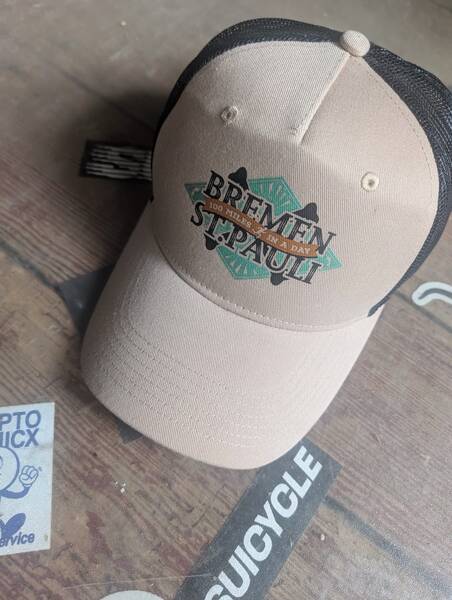
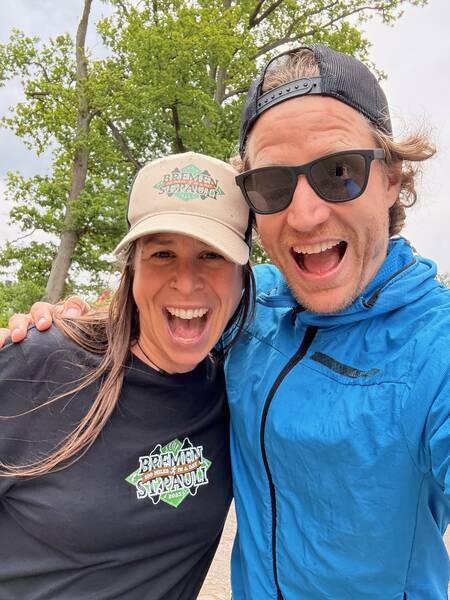
Michael Mankus and I were the guys where all the lines came together, as before. Micha’s huge network helped us with finding not only the four new core team members, but also a lot more volunteers who were able to help at the aid stations and the finish line. In total, there were nearly 40 helpers we added to a WhatsApp group chat in order to make communications easier. Micha’s suggestion was to use part of the entry fee money to produce trucker caps for everyone involved in helping. With a provider who made them sustainably and printed our great logo on them, these caps became a real hit. I’m wearing mine right now as I’m writing this. The volunteers liked them too and I have been asked many times if any more of those were available to buy after the race. Note to self: Don’t forget to set up a small Merch Store for the next edition.
📝 The Different Tasks to Take Care Of
🤓 Online Stuff
The technical aspects such as website design and signup form were done by me, as per usual. For handling the applicant status and money transfers we used the RaceResult service. They take a cut of the fees but make it a lot easier to process the payments. Still, it took way too many hours to maintain that old piece of software that I often thought I’d have been better off had I coded that stuff myself. That would have also saved us the money that RaceResult subtracted from the entrance fees. For the future editions, there’s a good chance I will build it myself.
In the running up to publishing our event for the public to take a look at and apply, we decided to offer two more race distances in addition to the 100 mile race from Bremen to Hamburg Sankt Pauli. This would make it more accessible for runners and increase the amount of participants, making the whole effort a lot more impactful. The racing options now were:
- BremenSanktPauli 100: The classic one hundred miler (160.9 km) from Bremen Weserstadion to Hamburg Sankt Pauli, Millerntor-Stadion, to be done in less than 24 hours, starting at midnight.
- SanktPauli 100: A 100 kilometer race starting at Rotenburg/Wümme at 8:00 in the morning later that day, also finishing at Sankt Pauli Millerntor-Stadion. Cut-off at midnight, meaning a time limit of sixteen hours.
- SanktPauli 50: The 50k entrance level ultra started at 2:00pm in the town of Tostedt, also ending in Sankt Pauli at midnight. The runners had a comfortable ten hour timeframe to make it to the end.
🧮 The Maximum Number of People
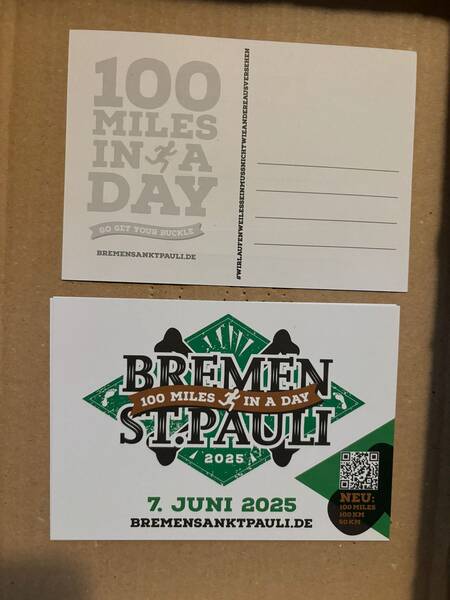
You can never know if enough people will sign up for the race to make sense. This is the part where we failed before, but have learned our lesson. Due to the new racing options and some great social media work by Nina and clever advertising with nearly no budget, people seemed to like this new setup and we had no problem getting enough runners together. Nina had postcards made which we dropped at several running stores in Hamburg to take for free, Micha made sure we had enough stickers to show off our logo at many places, and we all kept talking to our running bubble friends about the race and tried to get people to consider it.
Of course, we also had to ask ourselves: How many runners would be too many? At some point, the logistics start to become really difficult, after all. We settled on 100 people total, divided evenly across the three race distances. But the number seemed really daunting, too, because for us it would be the largest amount of people ever.
✅ The Vetting Process
Also, we felt the need to do a little “vetting process” of new applicants. The hundred mile and hundred kilometer runners needed to prove they could theoretically do it before we let them on the starting lists. This was mainly to make sure we wouldn’t need to do many shuttle drives to get those who DNF’d in the middle of nowhere to safety. It would have been too much of an effort. You want people who are actually likely to make it to the finish line.
Good thing the German DUV exists: This is an association which collects and presents ultra running results for each person in a clean and organized way. For free! It’s a huge effort, but it’s hugely practical for our needs. For everyone who applied, we asked for their profile website showing all their previous ultra running results. If they had no such page or the results showed they wouldn’t be likely to make it through the race course within the time limit, I kindly answered them all personally and encouraged them to get some more results and apply next time. I wrote dozens of emails. All of the people were very understanding of our decision. Some presented me with their training plans, even.
This way, we filled up the ranks with people who were serious about the race and brought the skills to stand a chance. A few would DNF still, of course, because some race days are just not what you hope they would be, but the likelihood was far lower now.
For the 50k race, we didn’t request any special achievements. In our opinion, anyone who wants to do that could make it through. The very comfortable time limit for that race meant you could basically hike the thing as well. We were elated to have two very young people sign up: An 18 year old and a 21 year old – both would do their first ever ultra marathon at our race! Maiken helped them get ready for it in the months leading up, and –spoilers– they both succeeded.
🗺️ Refining the Route
We’ve had a rough cut of the route from earlier years, but have changed it again and again to improve the quality. Micha was the guy to do 99% of the planning, while Till helped in testing many parts, and all others in our team ran a few test sections of it as well.
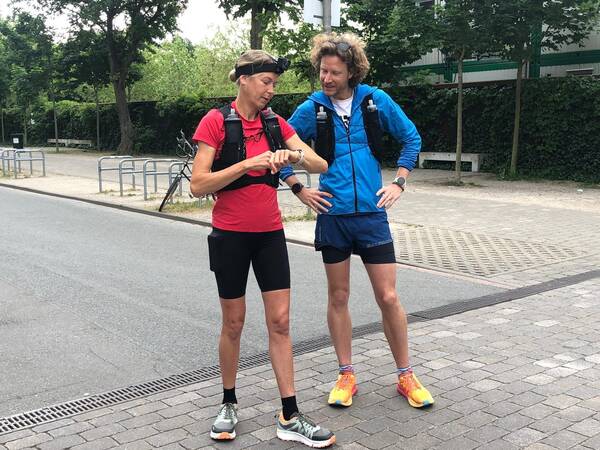
I once took my bike on the train to Bremen and cycled back to Tostedt, the first 113 kilometers of the 160 kilometer route. The process is always the same: See if the current routing is well suited for running, document it, make adjustments, test again.
It’s tricky because the aid stations had to be added into the routing and both has to happen at the same time. If we can’t get a location confirmed for an aid station, the route needs to be changed and still be of roughly the same total distance across all three race options.
🍽️ Aid Station Location Planning
We were all glad and thankful that Maiken took over the task and got this done. Her friendly and decisive demeanor was perfectly suited for it. Here’s an example regarding the Rotenburg/Wümme aid station, which would double as the starting point for the 100k runners: There’s a sports club called “In der Ahe” with some proper facilities just outside the town center and not far from a regional train station. The place looked to be very well suited for our plans. Toilettes, a roof over our heads in case of bad weather, a parking lot, running water, electricity. All of those factors are a huge luxury when setting up an aid station. The problem: We would need access during the ungodly hours of 5:00am to around 9:00am on a Saturday. Maiken found and contacted the main caretaker of the facility, Dimitij, and somehow convinced him to help us, unlock the gates that early and be present at the place during the time we needed it, all on his day off. She’s the type of person able to get things like these done.
Most other aid stations did not require such an extra effort from the people working there, but Maiken’s way of planning all this made the whole thing possible.
Not counting the start and finish, we had eight separate aid stations, two of them doubling as starting points for the shorter distance races. At some, we had access to amenities such as electricity, but others were make-shift spots at well-suited “off-grid” places along the route.
As well as at the great Rotenburg spot, we had another sports club offer one of their buildings to us, the TSV Todtglüsingen near Tostedt, our aid station #6 as well as start of the 50k race. There, we had access to electricity for providing heated up meals for the runners, sanitary facilities including showers, rooms for getting ready, and some parking spots as well.
And the wonderful folks at Wassersport-Verein Süderelbe not only offered their boat house building in Wilhelmsburg at kilometer 150 for us to use as the last aid station before the finish, they also threw in a bunch of members to help at the aid station! Together with the people of Inselrunners Wilhelmsburg it became a beloved spot of the runners.
It’s amazing how helpful people can be. The whole project really lifted up my faith in humanity. After the race we of course made sure to give some of the entry fee money to those clubs as donations for their kind help.
With all the aid stations in place, the route could be finalized. With some last caveats being the sudden appearance of construction sites blocking the way and the possibly wet weather conditions making some stretches tough to run on. Micha did his best to eliminate most of the risks, and the end result was definitely solid. I don’t remember a single complaint regarding the chosen running route from any participant.
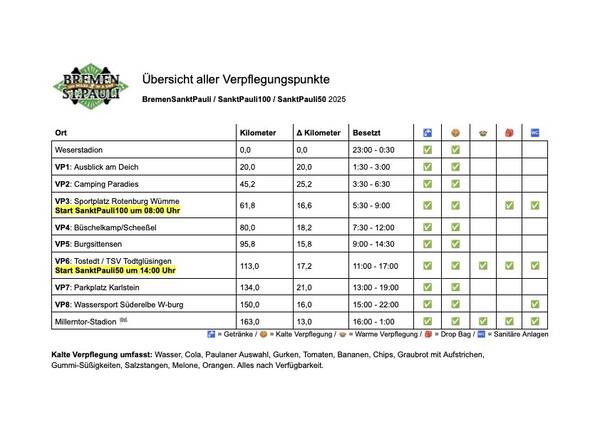
Next I was able to create a comprehensive list of the aid stations, or VPs, as we call them in Germany. That’s short for Verpflegungspunkt. On that list I made sure to add information such as the kilometer marks and type of aid available, so runners and also friends and family of them were able to plan their days better. I made a PDF file for easy printing but also put it on the website.
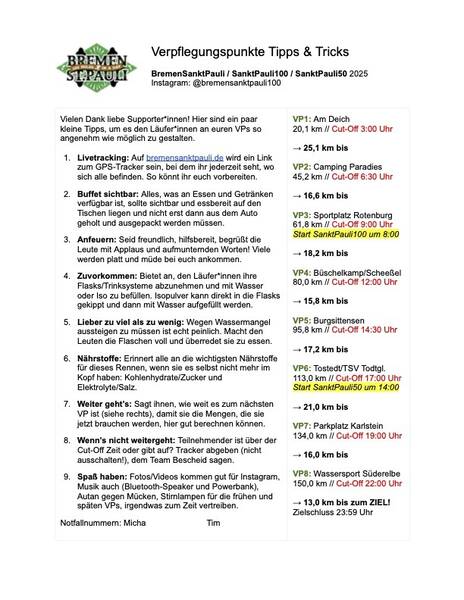
From our collective experiences helping at other races’ aid stations before, we knew what the most important things are when you’re volunteering. Not everyone who agreed to help during the race had experience, so I made another list that acted as a friendly guideline for aid station volunteering. It included things such as the current position and distance to the next aid station, because runners always want to know that. Tips on how to present the buffet and making everything available in a way suited for runners coming through, help refill flasks, cheer them up, what to do when someone can’t continue, and stuff like that.
Next to my personal Notion page which I used to keep track of all the necessary information regarding nearly everything, another huge part of the planning included a massive shared Google Sheet I set up so we could plan the aid station shifts. This was crucial, because aid stations had to be staffed for many hours which often overlapped. We had to make sure our wonderful volunteers were utilized in the best possible ways without tiring them out too much. Some had certain windows of time of availability during the day that we needed to accommodate. Some were okay with standing at an aid station at three in the morning, some not. Some had a car and could get to remote aid stations, some had to rely on public transport or others to share a ride. Most aid stations required people from our core team to be present, some not. Bringing all of this together was a big task that had to be improved and refined often.
I also created a Google Sheet for planning what to buy for the aid stations. This was needed because the amount is very difficult to guess with such a large number of runners. By using the simple formula functions, it became a lot more manageable to plan what to get. We offered all the basics we appreciated ourselves at all the races we had previously run:
- 💧 Water
- 🥤 Cola
- ⚡️ Electrolyte mix
- 🧃 Gels
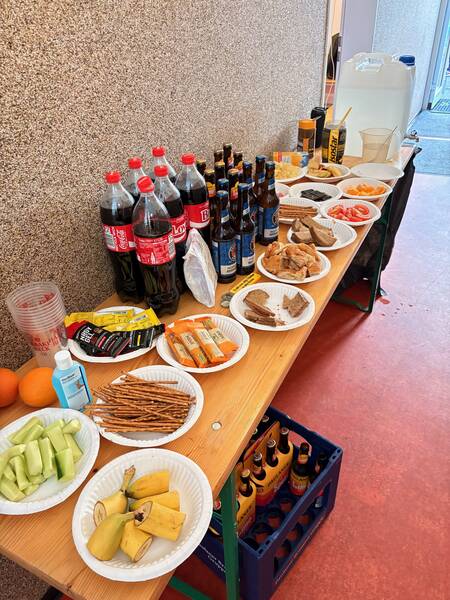
- 🍻 Non-alcoholic and alcoholic beers, fizzy soft drinks: For free from Paulaner, massive thanks! Different Paulaner people from the ones supporting us in Munich, so their pro-sports company ethic seems to transcend cities.
- 🥒 Cucumbers
- 🍅 Tomatoes
- 🍌 Bananas
- 🍎 Apples
- 🥔 Potato chips
- 🍞 Bread with toppings such as jam, Nutella, and peanut butter
- 🌾 Cereal bars
- 🍬 Gummy candy
- 🥨 Salty baked goods
- 🍉 Melon
- 🍊 Oranges
- 🍫 Chocolate
- 🧂 Pure salt
- ☕️ Instant coffee and vegetable broth at those aid stations which had electricity for heating water
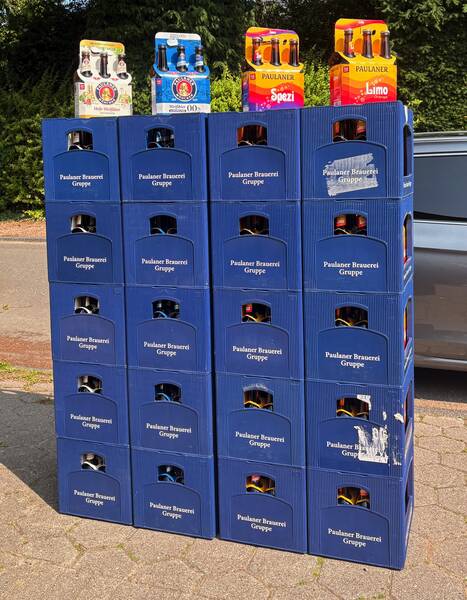
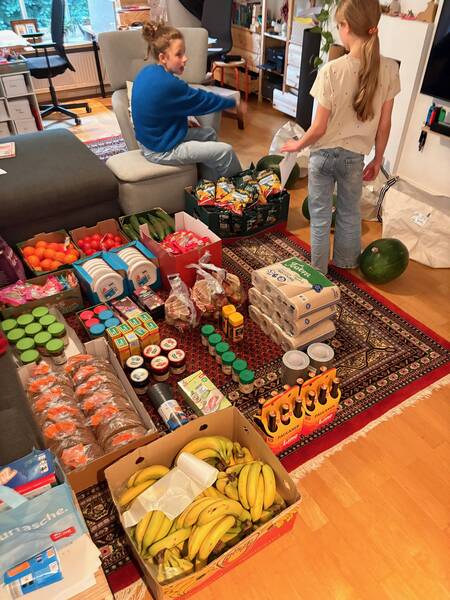
I bought all of this in the huge quantities needed and filled up our house. Then I had to divide it up into bags for each aid station so I could just hand each team a single bag. The amounts needed to be calculated, too: The first few night aid stations would only be used by the hundred mile runners, but the last two aid stations would see all runners from all the three races, meaning they would need at least three times the food and drinks. Also, people tend to become hungrier as the race goes on, so those last bags needed to be even bigger.
The aid station bags didn’t just need food, though. I made sure to add some other helpful items for the runners and volunteers, too:
- 📦 Duct tape
- 🗑️ Plastic trash bags
- 🍽️ Paper dish plates
- ✏️ Marker pens
- 🧻 Paper towels
- 🖍️ Sidewalk chalk to mark the road
- 🧴 Vaseline and sunscreen
- 🩸 Female hygiene utensil bags at certain aid stations prepared by Maiken
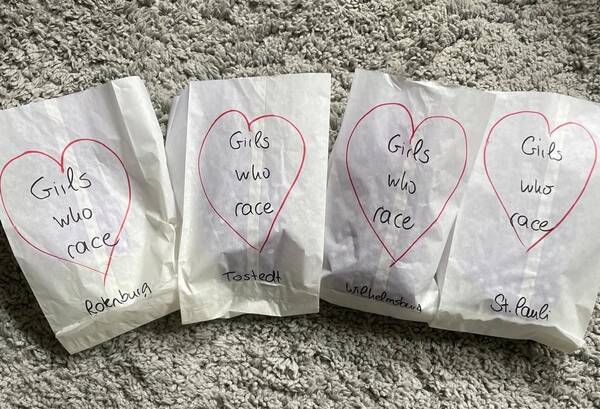
We asked the volunteers to bring cutting boards and knives as well as bluetooth speakers.
A few water canisters needed to be bought and filled up as well, but some of us already had some lying around we could use.
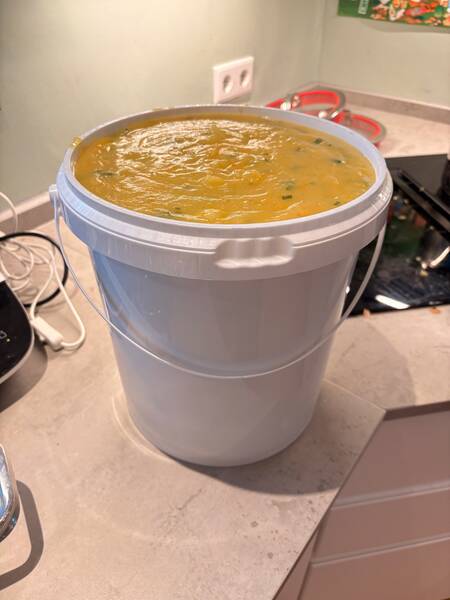
For the big Tostedt aid station, 113 kilometers into the 100 mile race, and about 50 kilometers into the 100k race, as well as the start of the 50k race, we decided to offer a warm meal because it just feels great to have something hot and salty as a break from all the sweet gels. We landed on a simple potato soup because it would be easy to make that vegan and gluten-free, while still offering loads of nutrients. The day before the race I cooked 12 kilograms of potato soup in my kitchen, Micha and a friend helped. Not the easiest task with standard kitchen ware, but we got it done. Micha sourced a gastronomy heater for it and that setup worked out perfectly. The amount I had calculated was exactly the right one in the end, too. Got a bit lucky there, I think.
And that’s how you create an aid station for an ultra race! Well, one of the ways.
🖨️ All the Printable Items
💯 Bib Numbers
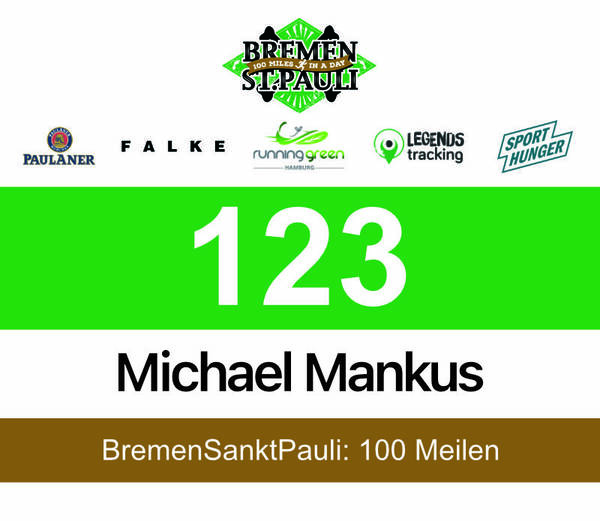
To make it easier for volunteers to recognize runners and just for the pure heck of it, we decided to have proper bib numbers made. I designed them and found a service that would print them on materials that would survive the possibly bad weather conditions. They turned out great.
🏅 Finisher Medals, Trophies, and Belt Buckles
Of course, the finishers would also need to receive medals. By sheer accident, I met Nina Witte during a networking event a few months before the race and it turned out she had just started a company that produces race medals and trophies from sustainably sourced wood! I loved the product. One of her first big clients was the Cologne Marathon which she provided with many thousands of medals, and they looked great. She was very happy with our logo after our own team’s Nina had adapted it so it’ll suit the medal shape as well.
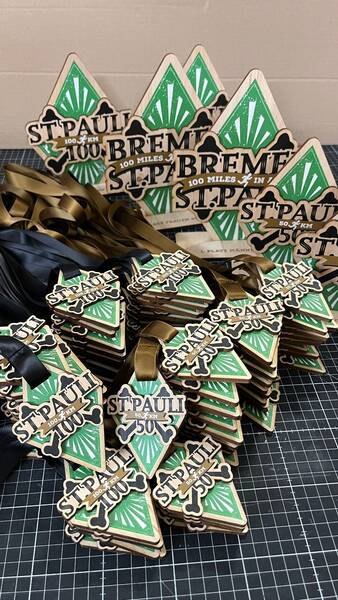
In the end, there was a slight timing issue with the production and shipping of the medals and trophies which had me anxious for a few days, but it all worked out well and the medals and trophies turned out to look really great and unique. The runners like them, as far as I could tell.
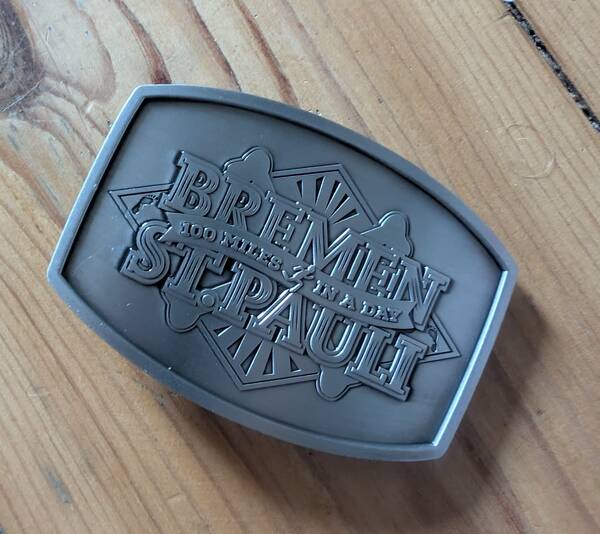
For all finishers of the most difficult route, the 100 miler, Micha had solid metal belt buckles made – as is tradition at many 100 mile races. Quite expensive, but absolutely worth it. And I’ve personally heard people say they only signed up for this race distance because of the belt buckles. Fair play!
👕 Cotton Shirts, Powered By FALKE
For everyone to proudly remember their achievements, we had cotton t-shirts made in classic black with the huge logo on the chest. Judith took care of getting those produced by the company FALKE. She has great contacts there and was able to reach the best deal for us. We got the highest possible quality shirts for each and every runner who ordered them, which most of them did. Those usually retailed for upwards of seventy euros, print not included, but thanks to Judith’s initiative we were able to charge our runners just twenty for them.
🎒 Starter’s Bags
In order to put all the items together, I found a company that makes bags from recycled cotton and prints stuff on them as well. I changed the logo so it’ll work with just two colors and ordered 100 of the bags. This way we made it a lot easier to present every runner who arrived at one of the three starting points with an individual bag containing all they needed from us. And in addition they would have the bag as a gift for later.
I asked my friend Benni from HoneyPower if he wanted to chip in some coupon codes and we got some from our favorite running gear store, running green, too, to put into the bags. They also gave us some greatly appreciated equipment to use for free.
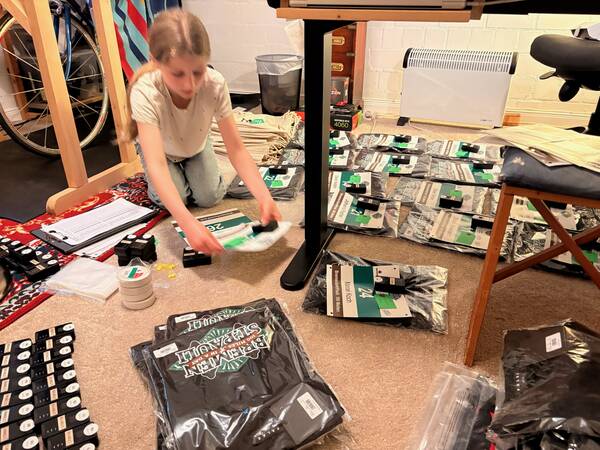
With some help of my daughters, we packed all the bags during the week before the races. We offered all runners to hand us their own personal bags to carry to the finish line, as well as so-called drop bags for the big two aid stations, so these needed to get marked with little tags, too. I prepared those in DIY style at home from colored plastic binders.
📡 GPS Tracking Devices
These didn’t need to get custom printed, but I had to order them in advance and put them into the starter bags. For a few races in the past we already used the service of Belgian company Legends Tracking, led by Frederique and Tim de Vriendt. They rent out GPS trackers which are actively powered and work anywhere in the world thanks to an installed SIM card. They transmit the current position to the web, and the Legends Tracking folks coded the software that would show all trackers on a live map that shows the route file and aid station positions, too.
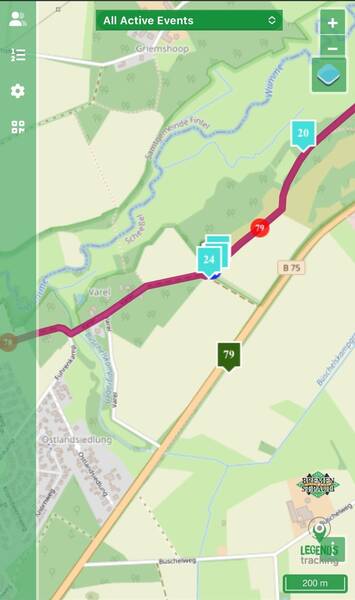
This was instrumental in our endeavor. It’s not only a huge improvement in safety terms to always be able to see if runners were doing well or got stuck somewhere, but also super helpful for volunteers to prepare aid stations in time. We always knew roughly when the first and last people of the field of runners would arrive at any point. And friends and family loved it, too, because they could follow their favorites in realtime. Even as a runner carrying a phone you could check your own position and see how far ahead or behind the others you currently were if you wanted to.
This is a great addition. It’s rarely seen at other races, though, and that’s probably mainly due to the high cost. The devices are expensive, even to rent. For us, it was a no-brainer, though. We thought about not ordering trackers for the 50k runners because that race would be pretty straight-forward and relatively easy, but in the end we landed on getting trackers for everyone. Good decision.
💌 Communications
In the months leading up to the race, we mainly used printed goods and the Instagram channel @bremensanktpauli100 to tell people about the race and encourage them to sign up. But as the field size was steadying out and people started asking specific race-related questions, we switched over to mass emails and the website.
Crafting an email for a hundred recipients eager to learn new information about the race isn’t the easiest of tasks, but I like writing so I took that under my wings. You need to be careful to be as clear and concise as possible, because if you’re not, you will get one hundred confused replies you’ll all have to answer. And the shorter the email, the better, because people won’t read it otherwise. That’s something I’m not great at because I like to include every single detail possible in order to transfer the complete knowledge. But I’ve been trying hard.
Every few weeks I sent out some new information, such as the renewed GPX file of the track, or aid station locations, or information about the drop bag situation. I think in total it were 3-4 big mass emails leading up to the race date. This was very well received. Lots of replies arrived, but rather than asking for clarification, they only stated they enjoyed the emails’ contents and felt very well informed. Job done successfully.
With all of that done and the time tables finalized, the excited nervousness was rising while I felt we were well prepared. But you can never know, some things are bound to go wrong. We would have to hope those wouldn’t be critical.
💨 Race Day, BremenSanktPauli, June 7th of 2025, Midnight
A couple hours before the midnight start we set up shop at the Fanprojekt Werder Bremen, who have rooms right inside the Weserstadion and were happy to welcome us again. Coffee, Franzbrötchen, as always. The friendship between the two football clubs SV Werder Bremen and FC St. Pauli is a great foundation for our run.
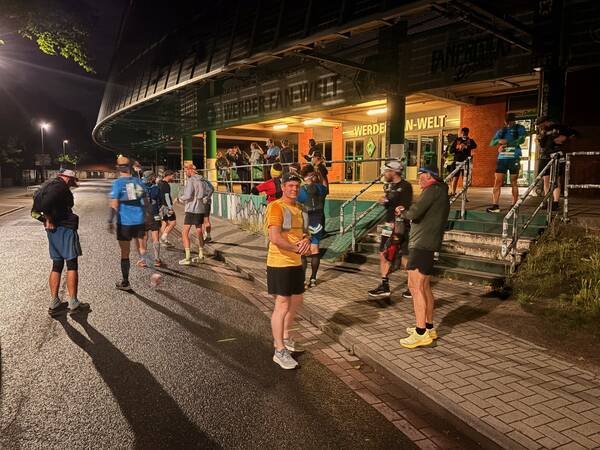
At this 100 mile race, we had 17 people starting here in the end. A bunch more had signed up but needed to cancel in the weeks leading up. This is quite typical – you need to be in top shape to have a chance at it and things can happen. There were two DNS (Did Not Start) people as well – they didn’t cancel in advance, they just didn’t show up. We were happy about the turnout, including our single female participant at the distance, Johanna. Nervousness in everyone’s faces. Many familiar faces though, and it was great to again welcome a few who took on a long trip to be here. With all bags ready to go it was easy to get the runners ready.
Micha did the race briefing for everyone, just reminding them of some tricky sections and to take care of each other and the environment, as well as the little quirk near the end: Runners would have to cross Elbe river by taking the old Elbtunnel which has both stairs and elevators leading down on one side of the river and up on the other, but taking the elevator would lead to instant disqualification. Laughs in the crowd.
Afterwards, I translated the briefing into English for one participant from 🇬🇷 Greece.
I was under the impression that everyone here was well prepared and stood a solid chance to finish. From the visuals, there was just one exception, our old friend Marcel Leuze. He showed up with just a shirt and two handheld bottles. No running vest, no equipment at all! Everyone else carried loads of gear, and rightfully so. But I know Marcel and he is a beast. He was national champion in Germany in the 24h running category, twice. He knows what he’s doing. It looked funny, though, seeing him next to all these runners in full gear while he looked like he was about to do a lazy summer 10k in his neighborhood.
Sending them all off on the long journey back to Hamburg felt really good. Like some big release of emotions after all these months of preparation and especially the past few intense weeks. Almost like I was about to run the race myself – which I really would have loved to do.
🏕️ Setting Up Aid Stations
After the runners had left Bremen, our core team split up in order to staff the next aid stations. The first two night aid stations were possible to put up using just a single volunteer team, lead by Micha. The field of runners was still relatively close together after 20 kilometers at the first aid station, so he was able to get them all refilled, pack up the aid station and drive to the next position at 45 km and set that one up before the first runner arrived.
With my family van fully packed, I drove myself and both Maiken and Judith to the third aid station at Rotenburg, which would also be the start of the 100k race later in the morning. In order to make it through the next 24 hours, I brought a tiny tent and we had sleeping bags ready. That way we could get some shut-eye between 1:00am and 4:00am which helped tremendously. During the cloudy and damp morning, the amazing Dimitij showed up, unlocked the gates as promised and in time for us to set everything up and have it ready just before the race leaders arrived.
A few extra volunteers showed up in order to help us here.
Still early in the morning, the excitement was present but had some room for improvement. The darkness of the night behind everyone, most people were happy to arrive here after 62 kilometers of running to have a short break. Some made use of their drop bags we carried here for them and switched shirts or restocked on their own energy gels.
Since the place is a sports club and has a proper 400-meter track, Maiken came up with the idea to have everyone run an additional lap and have a bonus classification for the fastest lap. Fun idea for sure, so we used our phones to time everyone going around the lap. This required a few volunteers to take everyone’s lap times on their phones and store them in a single place, which I then did.
🔫 Starting a Race During a Race
Reaching 8:00am, it got crowded because all the “SanktPauli100” 100k runners arrived here one by one, and they were 26 in total. With some being driven here by friends and family, the place filled up. Every once in a while a 100 mile runner would come by and restock at the aid station while we were also busy showing the 100k runners around, handing out bags, explaining the GPS trackers, receiving and storing their finish line bags, answering last minute nervous questions from them, and keeping track of everything despite the tiredness of the short night.
The newly arrived runners all looked really fit and up to the task. Nearing 8:00am, we moved over to the 400-meter track where we would host the start. Whenever a 100 miler came by, they received cheers from everyone here, adding to the good vibes of the day.
This time, I gave the short race briefing for the 100k runners, but thanks to my information-dense emails everyone knew what was coming. For Yixuan from 🇨🇳 China, I translated the most important parts afterwards, everyone else understood German well enough, even including two 🇬🇧 Brits and two 🇮🇹 Italians.
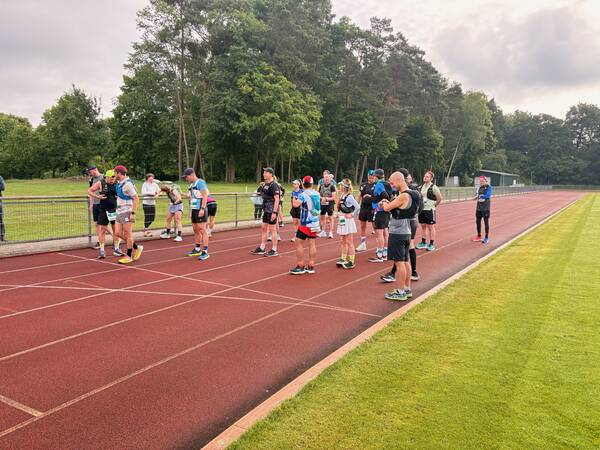
We had them all run a lap on the track, just because it was so nice, before sending them off onto the 100 kilometer long course towards Hamburg Sankt Pauli. Clapping, high spirits, party pace, let’s go! Now it felt like the whole event was in full swing.
If I remember correctly, a few more runners of the miler came by here after the 100k start, but it wasn’t that much later. When the last one passed it, still within the time limit and before 9:00am, we closed up shop, cleaned everything up, packed the car, and thanked Dimitij for his great help.
🛍️ The First Small Hiccup
So far, everything had gone great and we felt quite good about ourselves. That is, until we realized how many finish line bags the 100k runners had left us here. They wouldn’t all fit into my already full van which held all the aid station equipment and us three people! We did our best, but a good amount of bags wouldn’t fit. Thankfully, Stefan and Lilia came along, who had helped at the two night aid stations prior and took the remaining bags into their huge mobile home to drive back to Hamburg. Super nice of them. But, admittedly, a clear miscalculation on our part.
With that sorted out, Maiken, Judith, and I made our way towards our next designated spot, the Tostedt aid station, also the start of the 50k race. Thanks to the Legends Tracking GPS info, we knew we had some spare time before the first runners would arrive there. It’s located at 113 kilometers of the miler and just over 50k for the 100k runners, who had started not that long ago. We used the spare time during the drive to visit one of the other aid stations in between our big ones, the halfway point one at Scheeßel.
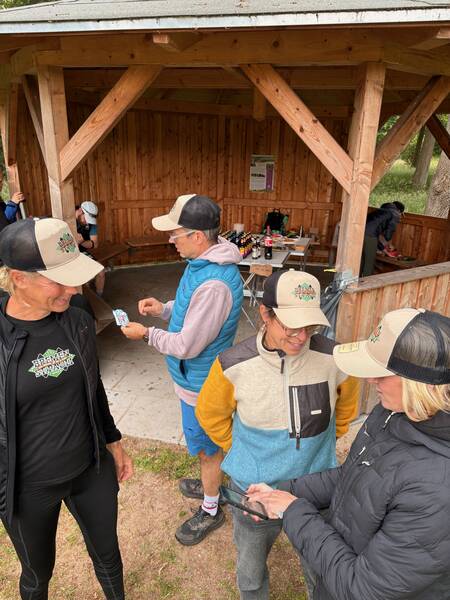
Vibes were really good here, lots of people hanging around waiting for their runners and celebrating everyone arriving here. Nina and Lars had made it into a wonderful aid station with the help of lots of others. Nina was also taking care of the social media during the race and did that perfectly. The account gained lots of followers on the day, and rightfully so. She posted updates, fun videos, re-shared stories from runners participating, and all of it while spreading the fun which it was. And while managing the aid station at the same time.
Music was playing, huge flags set up, Yorck was dancing in a dinosaur costume inspiring the creation of many more Instagram videos. It was great fun for us hanging out here – and that showed in the faces of the runners coming by. Super cool aid station work. I think this was the moment when my general nervousness made a significant step into the direction of confidence that the race might become a success.
Meanwhile, Micha had driven to the aid station after Scheeßel, near Burgsittensen, ready to go and take care of everyone coming through that point. He was probably the guy who got the least amount of sleep of us all in the team, but he soldiered on like the pro he is.
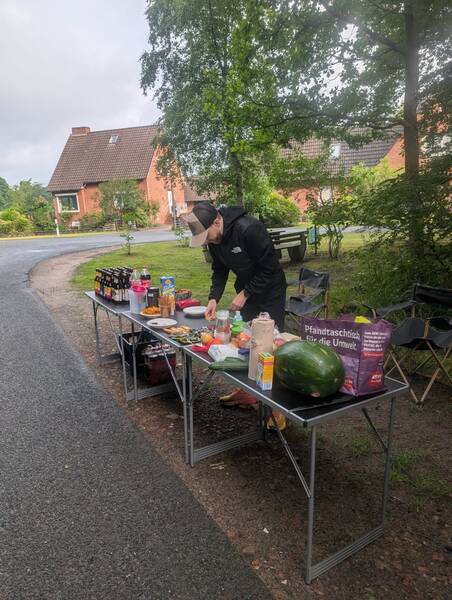
🚐 Moving to the Next Aid Station
After half an hour or so of hanging out at Scheeßel aid station, a truly welcome little break, Maiken, Judith, and I drove over to Tostedt and got ready to welcome the first runners there. By now it was somewhere around 10:00 in the morning. And it wouldn’t take that much longer until the leaders of the 100 miler, Marcel and Karsten, would arrive here. Marcel switched shoes by making use of the drop bags he had handed us at the start. More grippy ones for the upcoming muddy forest kilometers. Weather wasn’t the best, it was raining from time to time. Could have been a lot worse, though.
One of the members of the TSV Todtglüsingen club that provided us with the facilities here spent an hour or so with the three of us to witness this race, which, from his perspective, was a crazy long and almost unbelievable thing. When Marcel and Karsten left the aid station, he was laughing in disbelief at how well and strong they were both looking after having run for 113 kilometers already, including a night without sleep.
For Maiken, Judith, and me, a certain routine had set in by now. We had found our groove. Whenever a new runner appeared, we were quick in making sure all the things they could and would want were taken care of in parallel. Filling up the flasks with drinks of their choice, having warmed up potato soup ready to go, naming all the food items they might need to make sure their eyes weren’t missing anything due to the fatigue, having some words of encouragement ready, – sometimes a hug was desperately needed –, and cheering them on as hard as we could when they left the place again.
Not long after 12:00pm noon, the 100k runners also arrived here one by one, sometimes in small groups. More people to take care of. We were thankful for every helping hand, such as my friend Mathias, who included a few hours of volunteer work into his long Saturday bike ride from Hamburg to Tostedt and back.
Nearing the 2:00pm start of our third and final race, “SanktPauli50”, the 50k, it started to get really crowded here at TSV Todtglüsingen. Many people didn’t use the train but got themselves driven here by car, and their friends and families were now also hanging out here until the start.
🔫 Starting a Third Race During a Race
With every new 50k runner arriving, a volunteer was needed to explain to them where the race bags are, how the GPS trackers worked, and answer some general questions, too. Same as with the 100k race start before. Just with a lot more people, because now the 100 milers and 100k runners were both also coming through here and deserved attention.
Well, to be fair, most of them didn’t really need much attention, but I knew from personal experience that the more attention you give them, the more likely will they enjoy the whole race. Helpful aid station volunteers are just the best, and it is my own high standards that make me want to provide them with that. Not so easy during the increasing chaos here, but we mostly managed to do this quite well in my opinion.
After welcoming everyone to the 50k race that was about to start, Maiken and I shared the duties of giving the short race briefing. We took a group photo of everyone and Maiken was really great at raising their spirits here. Again, good vibes. Smiles everywhere.
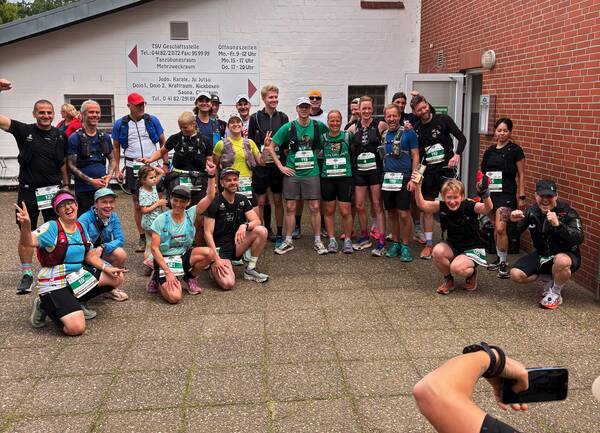
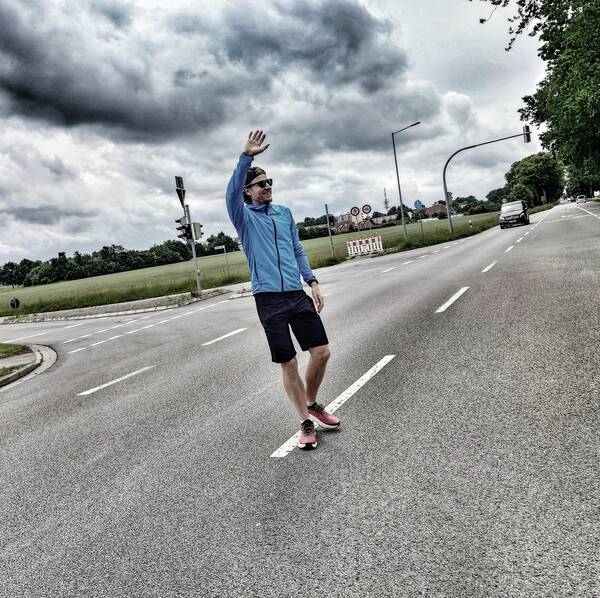
A 50k is a faster race compared to the 100k and 100 mile races, obviously. Some runners will do this at really high speeds, we knew that. But they would need to cross a major road after just about a thousand meters, and we couldn’t find any suitable crossings except for the one traffic light. To make sure no one would cross it blinded from the racing adrenaline during red lights while trucks were speeding by at 90km/h, we decided to do a neutralized start, such as they do at the Tour de France. Maiken and I did the countdown at 2:00pm and then led the full gang through Tostedt at a relaxed 6:00min/km pace towards the crossing, where we made everyone wait for green lights and sent them on their way towards Sankt Pauli. This was lots of fun, especially for Maiken, who had a bunch of her friends run this race. Both of us were hyped afterwards when we returned to the Tostedt aid station.
🪫 The DNF’s
With the 50k runners and their friends and families now gone, the situation at Tostedt aid station had calmed down by a lot. We still had to keep the station open, because some people need ten hours for 113 kilometers while some others need seventeen. That’s the cut-off we landed on. Whoever doesn’t make it here until 5:00pm would have to drop out. And it turned out, this was the location where most of the DNF’s happened.
Even with the vetting process we did for every single one of the people who signed up for the miler, you can’t make sure there’s no one who won’t make it. The race distance is just so tough. If I remember correctly, we had a total of four people DNF’ing here of the 17 runners who started in Bremen. Six had to DNF the miler in total, so two of them stopped at some other point. But, I’m really happy to say, not a single one of the 100k race dropped out – at any point. All of them made it to the finish line in time. And with 11 of the 17 milers also completing the race, we were very pleased as well. The ones who did the 50k also all made it, by the way. By those numbers, you can definitely state the race was a success and the time limits not overly difficult.
From a volunteer’s perspective, a DNF’ing runner is a tough situation, often. You feel for them. It’s a fine line between encouraging them to continue and being understanding when they just can’t anymore. Ultras do inherently mean you have to toughen up many times during each race and just march on despite it all, but when is that point reached where it stops making sense to do that? An injury is a clear indication, as well as the cut-off time being crossed, but everything else is a grey zone.
It also takes a lot of time to take care of those who decide to stop the race. They will sit there for minutes, eating, drinking, thinking, while you’re encouraging them. Then, they will start to get cold, so you need to keep them warm somehow to avoid more damage. Talking some more, encouraging, sometimes presenting some positive facts and arguing a bit, it all takes time. And when they then finally and sadly decide to drop out and use the shower here, they will need help charging their phones and finding a way home using the train. Head held down, they slowly walk away. This is a sad moment for everyone involved. No belt buckle for them this time.
The emotions are running high as well as low, reaching extremes everywhere. Adding to the sleep deprivation, they are often amplified.
When the last runners had continued on or dropped out, respectively, Maiken, Judith and I were finally able to pack it all up and clean the place.
🧮 The Educated Guessing
My potato soup calculation was spot on, the 12kg bucket was empty now. All the other major items of the buffet were also still available in low quantities, so that had worked out well, too. There was just one slight issue: Too little electrolyte mix at the aid station closest to the finish line, the Wilhelmsburg one. Of course that was the one where most runners were in dire need of the nutrients, but I had somehow misjudged that and packed too little of it. Other than that, I’m not aware of any major shortages of any kind.
This has been one of the main factors that made me nervous beforehand. Had I screwed up the amounts, the whole race could have become a fiasco real easily. And it’s not that easy to make the complete list make sense – all you can do is take an educated guess, really. The more stuff you offer, the less of each you will need, further complicating things. And what items will be really unpopular you can’t really know. The weather is another factor – people feel like eating fewer melons in the rain, but more chocolate instead. The hotter it is, the more salty things you need to offer. I’m really relieved it went mostly smoothly in that regard, with just that one electrolyte mix screw-up in mind.
The weather was now taking a turn for the worse, with little rain showers in increasing amounts. I was longing for the drive in the warm car after so much standing and walking around taking care of things. We all were.
Packing it up went faster and smoother now with everyone involved having done it before. Of course, we had to pack about thirty more finish line bags of the 50k runners into the van now. A lot less food needed to be carried now though, so I think it all fit into my van. I don’t remember if we needed to ask anyone else to take a few bags to Sankt Pauli for us this time, but I think not.
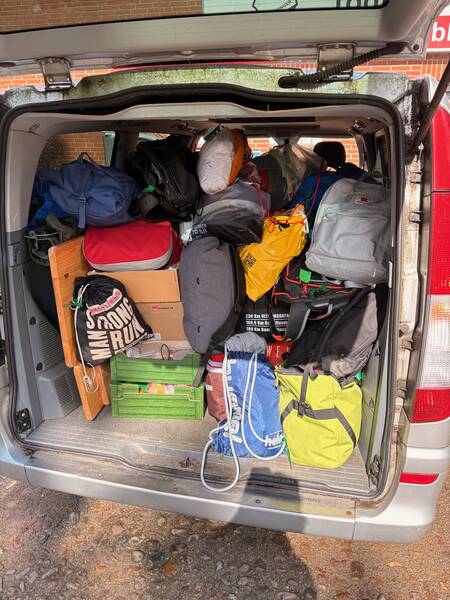
The aid station and race initiation duties of Judith, Maiken, and me, were now done.
This felt good. It all went according to the plan. A huge load off my mind. But, the big finale was about to come.
📝 More Aid Station Learnings
Over the course of the day, the WhatsApp volunteer group chat was filling up with messages and pictures. It’s been great to have this type of live reporting of all the aid stations available. All of the ones up until our Tostedt one had been closed by now, of course. Two more stations were left between here and the finish line. A lonely car park at a place called Karlstein, unfortunately cut off from cell reception, and the last one in Wilhelmburg, run by the Inselrunner club members inside the Wassersport-Verein boat house. Lots of people were creating a great atmosphere at that place in particular. We received many pictures.
An unusual incident happened here when 100k runner Nick missed the aid station accidentally and just ran on, but thanks to the GPS trackers the issue was resolved by volunteer Matthias, who packed a few things into his bike and chased Nick down to resupply him with the goods. If that’s not the definition of going the extra mile, I don’t know what is! When I heard about it, I have to admit I had fuzzy warm feelings inside. I’m not sure what we did wrong here, since everyone else apart from Nick found the aid station. But maybe some more signage would have done the trick.
The Karlstein aid station though seemed to not have been a great choice by us. Lacking cell reception and therefore reliable GPS tracker updates is a real issue. Our core team member Till was the chief here and had to move around a lot in order to get some reception for tracker updates. Not great. That’s a key learning here when we plan the next edition: All aid station locations need to have proper coverage.
🏁 The Finish Line and the Issues That Came with It
When the two ladies and I reached the finish line at Millerntor-Stadion, the two leaders of the hundred miler runners had arrived. After them, there was a big gap to third place who wasn’t yet here. Marcel, who won in just under sixteen hours, and Karsten, who needed about half an hour longer than him, had already taken a shower and were exhausted and happy with their achievement, from the looks of it.
The 100k runners had about an hour more to go, as did the 50k ones. There was a little break for us, but not really. Micha had already arrived here to welcome the winners and cook the finish line pasta with some new volunteers. I had never bought so many kilos of pasta before.
We had the support of the FC St. Pauli Clubheim folks who not only allowed us to use their gastronomy style kitchen, a large room for storing the finish line bags of all the runners, but also the showers which are connected to it. This is all inside the St. Pauli football stadium building, perfectly located within sight of the club emblem monument we designated to be our finish line. Having access to the Clubheim has been absolutely perfect, not least because it’s a bar with fresh draft beers.
The big downside was that in my planning I had underestimated how much there would need to be done here at the finish line area. In hindsight, this was quite stupid of me. Mentally, I was in a state that has been too relaxed for the situation. Everything had gone so well up until now, I thought we had it in the bag for sure. But there were at least seven more hours of intensity to go until the last runners would arrive here, hungry and exhausted, in need of care, a medal, some congratulations, pasta, and a shower. Not to mention the podium ceremonies for three separate races for the male and female contestants each!
And we were all super sleep-deprived, which certainly hindered clear thinking at this stage. This started with the finisher’s lists. I had prepared paper sheets to fill out with the names and times of new arrivals and some volunteers used them here. It was a real struggle to write down the names in the rain! It was still on-and-off-again showering, getting worse as the evening went on. After a bunch of hours and two of the six podium ceremonies, Micha was the one to realize that the Legends Tracking GPS website had a finisher’s list it automatically calculated by using geo-fencing at the finishing area. No writing on those sheets I made was necessary at all! All the struggle for nothing.
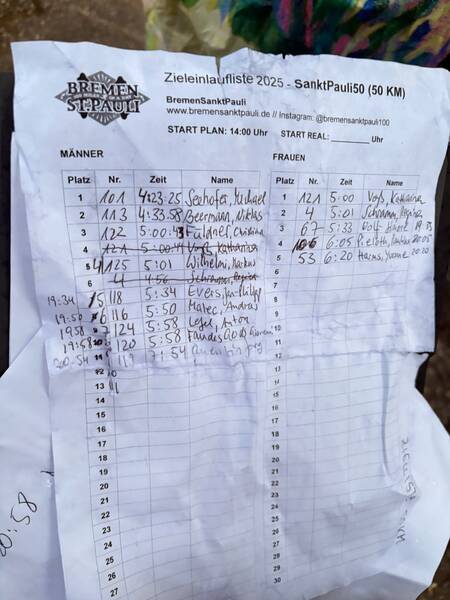
Also because of the rain, I didn’t feel comfortable in storing the medals and belt buckles for our finishers near the club emblem monument, as we had no tents ready to go here. So whenever someone new was about to arrive, I ran to the Clubheim, got the medal or belt buckle, ran back and handed it to them. That way I missed a few arrivals. I tried asking others to help getting those in time, but this didn’t work out well. Too many instructions necessary. In the end, I brought the boxes to the spot here at the finish, regardless of the rain messing with the boxes.
My wife Sophie and a few of our four kids came by and brought me something warm and salty to eat, which was a tremendous help for my battered brain. Ironically, while maintaining aid stations full with food all day, I hadn’t eaten nearly enough. Not great. When Micha saw my fresh and hot falafel döner during a break from cooking the pasta, he immediately started taking bites out of it, too. He clearly had the same problem as I!
I felt a bit bad about having to hug all the finishers now while breathing garlic, though. Again, so many emotions at the same time. Those small mess-ups, the little quarrels with my core team friends, but also the happy faces of the people arriving here and the talks with those who had already showered and wanted to thank me for a great event added up and were becoming harder to take in my sleep-deprived state.
Sophie walked around with the kids and found out that some help was needed in the kitchen, cooking pasta for the people arriving, so she took over for a while. How great is she – not only does she have my back during the intense preparations and this particularly tough weekend by taking care of the kids and household, but she also comes over to visit and help. Words cannot express my gratitude, no joke.
Here at the finish line area there were just many more tasks to do than I had anticipated. Someone had to stand at the finish at all times and hand out the correct medal or belt buckle to each runner arriving. Someone had to welcome them into the Clubheim, offer them pasta which someone must have warmed up in time, someone had to show them to the showers and unlock the door because we had to crowd-control the room. Someone had to show them their finish line bags and drop bags we had also carried here from Tostedt. And after a few hours, each of those someones needed to be replaced with someone new. Also, bathroom breaks. Timing had to be considered.
And someone had to manage all those helpers and find replacements in time. It started to become chaotic and solutiond needed to be found on the spot. We all did our best, that’s for sure. And for what’s it’s worth, I haven’t heard complaints from participants. I think in the end everyone got what they needed. With better planning it could have gone a lot more efficiently and less stressful for us, though.
Someone else apart from myself could have done that planning task, too, of course, but I guess I gave off the vibe I had it all under control when in fact I forgot about coming up with a plan for the finish line area. A mistake I won’t make again.
🏅 Celebrating the Winners
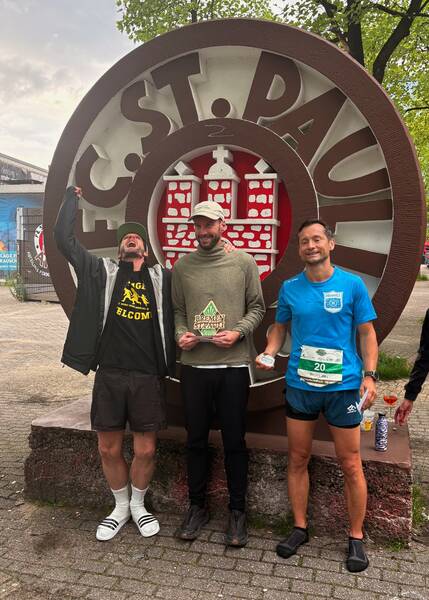
Everyone who makes it through a race of 50k, 100k, or even 100 mile distance in one piece has earned their celebration. For the first three of each, both females and males (we didn’t have any non-binary entrants), we decided to get gift cards to use at the running green store. The six first place winners would receive a trophy that looked like our wooden medals, just a lot bigger. And the longer the race distance, the bigger the trophy. I think the trophies turned out great and I hope they reached honorable spots in the homes of our six winners, which were:
- BremenSanktPauli 100 Miles: Johanna Fischer (21:55h) and Marcel Leuze (15:55h)
- SanktPauli100 (100k): Jule Schnakenberg (12:10h) and Philipp Huhn (9:50h)
- SanktPauli50 (50k): Katharina Voß (5:00h) and Michael Seelhofer (4:22h)
Finding the right time for every of the six little celebrations was a struggle. The first three of each race and category must have already arrived, which meant some people had to wait for a few hours after finishing until the others were available.
Also, none of us in the core team are born masters of ceremony, so we all tried to get the other ones to do the public speaking 😄 – in the end, most talks were done by either me, Maiken, or Micha, sometimes all three of us. And after each one, it’s straight back to welcoming other finishers or helping someone do something or coordinating or cleaning up.
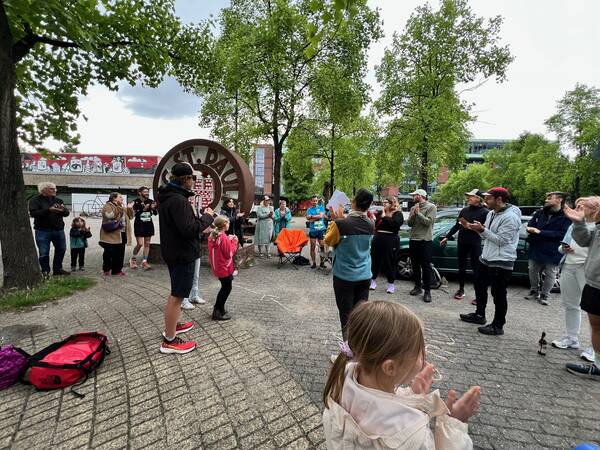
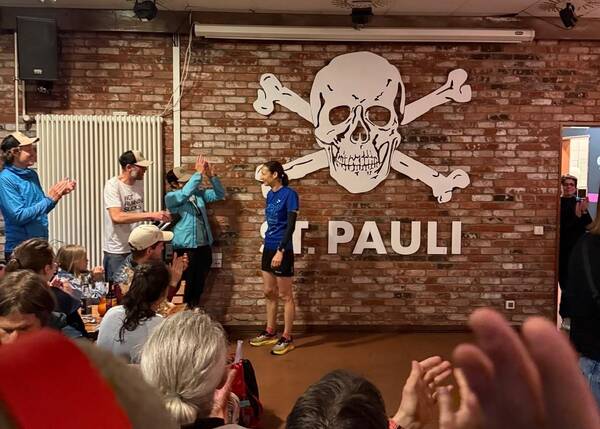
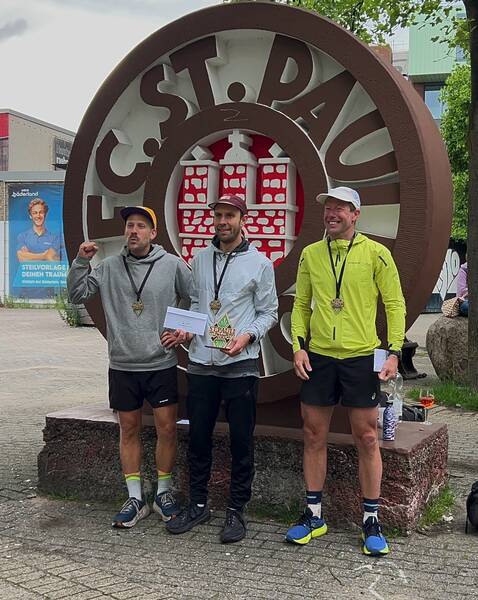
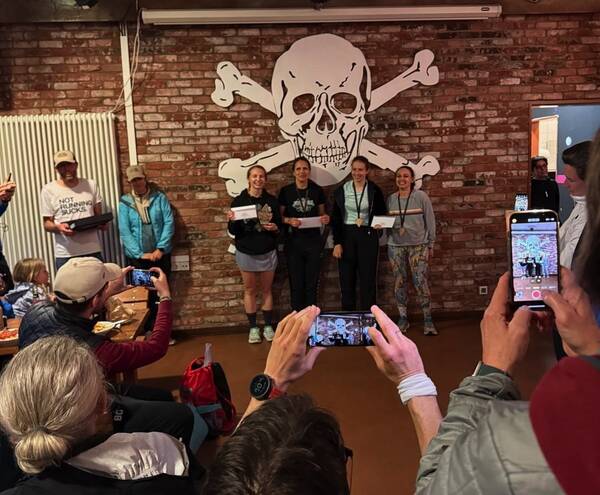
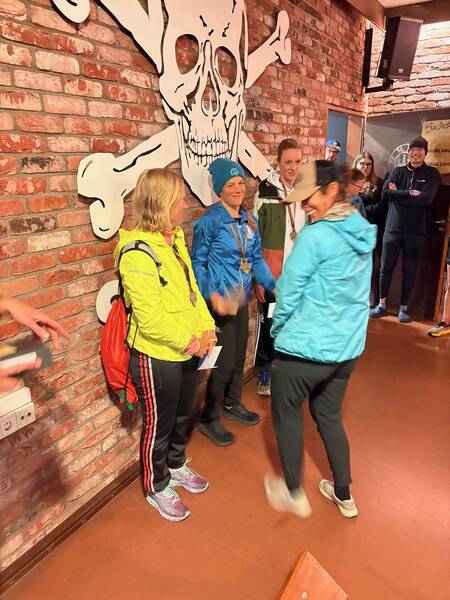
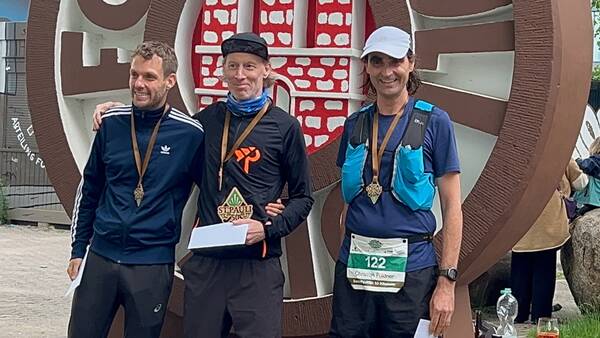
The roughly eighty people who made it were spread out across the eight hours between the first and last arrivals with little Gaussian bulbs in the middle.
I have to say though, standing at the finish line, welcoming them and hanging a medal around the necks after a big hug was one of the most rewarding things to do. They were so happy and proud. A few cried tears of joy. And I got so many compliments right here for the whole event. I’d like to highlight three of them:
Matthias, the only one to start and finish both our previous edition BremenSanktPauli as well as this year’s 100 miler race. He was looking forward to the race so much he even wrote the words “Mein Western States” on his forearm for the race so he would remember how far up among his favorites this one was. When he and his girlfriend Jasmin showed up, we spontaneously hugged even though we only knew each other from the previous edition. That’s how close you get with each other during an intense day like this. It was great to see how Matthias fought through the miles and reached a personal best in the end, too.
Bruno, who became the third place male of the 100 miler, told me how much of a struggle he had with his digestive system during the first sixty kilometers. Countless unplanned breaks in the bushes during the night, it sounded horrible. He was super disappointed and about to give up. But the way we helped him at Rotenburg aid station with warm vegetable broth and our friendly demeanor made him gain hope and continue on, he said. He overcame the issues he endured for so many hours and got back into the groove to finish the race in third place in the end, thanks to our help. How cool is that. He told me several times how grateful he is for us putting together the race and helping him make it through.
Martin, a true veteran born in 1968, had this race on his mind for many months before today. He planned it meticulously and even had his own support crew traveling from aid station to aid station. He told me right after finishing after 23:15h in the dark of the night near the St. Pauli emblem how he prepared for it. Four months back, he ran the whole course in five stages, one after the other, day after day, in order to familiarize himself with it. He knew it would become very hard for him to make it through the 160 kilometers in less than 24 hours, but he also knew he stood a chance. So he tried. And he was successful. He told me how the race “carried him through the year” – his words. He said the event exceeded his expectations and that he had huge amounts of fun. He was grateful for all the volunteers being so motivated and friendly. “You guys created a superb running event out of thin air – chapeau!” (”Ihr habt eine super Laufveranstaltung aus dem Nichts erschaffen - Hut ab.”)
There were a bunch more talks I had with finishers right there, and also lots of emails expressing thanks afterwards. This made me nearly forget the stressful bits and guilty feelings of the mishaps along the way.
Little side note, at some point during the late evening, the smoke detectors of the showers went off. Connected to large parts of the stadium’s fire precaution system, it was deafeningly loud there, and for a long time we had no idea the showers were the cause of it. Firetrucks arrived and solved the issue. There was a phase during which we were really worried this situation was caused by us and that we could be made responsible for it. In the end though, it was a simple technical malfunction.
Having the official spokesperson of the FC St. Pauli club being a happy 100k finisher at today’s race and telling us there’s nothing to worry about did also help.
Waiting for the last finishers right before midnight still took quite a while. The rain intensified at times, but we also had dry periods. Every single runner arriving was happy to be done, understandably. I’m not going to lie, it was a relief when the last ones finally appeared.
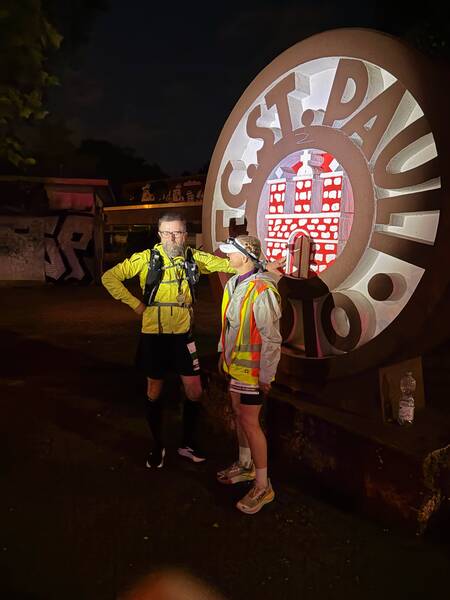
🎉 No one got hurt, no one got lost, no large complaints. In my book, that’s a success.
Sure, there’s a lot to learn and improve for next time, and I’ve got the list ready, but throwing everything into one equation returned a positive result today.
🧰 What to Improve For Next Time
- Signs at each aid station: Where am I, how much is left to go, how far to the next aid station? I put these numbers into the guideline sheets so volunteers knew it and were able to tell the runners, but having prepared large signs would have made that a lot easier for everyone.
- Plan the finish line tasks: What things need to be taken care of, who does it, and when exactly. Have a few more fresh minds here to compensate for the sleep-deprived core team’s mood swings.
- Drop bag transport: Better estimate the amount of bags that need to be carried to the drop bag spots and the finish line, have a spare driver ready to go just in case. Maybe even rent a bigger car in the first place.
- Welcome the final finishers with more people: This needs to be celebrated more and they would have been happy about it.
- Move the no-cell-reception aid station, maybe add another one: In general, the amount of aid stations was considered to be good enough. Setting up yet another one would have required many more volunteers but it might have felt a little more luxurious, especially towards the end. And don’t forget enough electrolyte mix for all of them!
- Build the payment process myself and throw out RaceResult: This requires lots of work on my part, but I know how to do it and in the end it would save us much money that could go to making the race better or to the charities we chose.
- And lots of smaller improvements:
- Add a reminder to the aid station guidelines that improvisation is to be expected and often necessary
- Promote the locations of the aid stations more visibly on the website and on social media so friends and family could come by more easily
- Make differently colored bib numbers according to the race distances so it’s easier to discern at the finish line who gets which medal or belt buckle
- Set up a little not-for-profit Merch Store on the website so people can buy the caps everyone loved so much
- Add a volunteer sign up form to the website – we had multiple people asking how they could become a volunteer next time
That’s a long list, but most of it is easy to solve. And should we decide against some or even all of these possible improvements, we’d still have a solid next race, such as we had this time.
Back to today. Cleaning up everything and loading up the van one last time today took about another hour. I drove Maiken and Judith home and was so happy to finally collapse on my own bed afterwards, way past midnight.
Still, the work was far from over.
📅 What Needed to be Done After the Race
Starting right the next morning and continuing over the better part of the coming week, many more tasks needed to be taken care of. I completed the finisher’s data and Micha sent it to the DUV guys while I prepared the results page on our website. Getting it all into the RaceResult software was next on the list, so that the thing would spit out finisher’s certificates to download for everyone. The template for it had to be designed on the spot by me, too.
Unfortunately, three of the participants had taken their GPS trackers home with them although the Legends Tracking people in Belgium needed them back as soon as possible. It was our fault, we should have collected the devices rigorously right after every single person’s finish. After contacting the three guys and finding out they lived in the most remote places of Hamburg but thankfully not in Italy or China, I had no choice but to jump back into the van and drive through the whole city for hours to retrieve them as fast as possible. This could have been avoided with better finish line planning, too. Frustratingly, it turned out that I needed to drive to the other end of town to hand the full set of all 90 GPS trackers to the FedEx guys at their regional headquarters in person, because the devices are considered hazardous due to the batteries and this was the fastest way to get them back to Belgium in time. My effort wasn’t in vain, it all worked out in the end.
I also cleaned the rented heater and cutlery to bring them back to the event management folks. All the empty crates of Paulaner beer, as well. Gathering the lost and found stuff and informing everyone about it. I then made a list of everyone who did not appear at the starting lines and asked them directly for their shipping addresses and shipped them their shirts and bags for free, about a dozen packages.
I composed a long and heart-felt message to send to everyone who participated in the race. I also sent a message full of thanks to our volunteers in the WhatsApp group chat. Those people were absolutely instrumental in helping.
Micha and I met up, because we had most of the food remnants between our two cars. We sorted out the things which were still edible, divided it all up, and he brought the good stuff over to an organization here in Hamburg called Dein Topf e.V. who make sure the too-good-to-go left over foods are divided amongst those people in need of food.
This moment after we were just done sorting all the remnants of the race from both trunks of our cars and ready to leave, he gave me a hug and told me that it was his pleasure to put together another race event with me. Coming from him, that meant a lot. He’s a very lovable, but also sometimes kind of grumpy person, but in the best possible way. He for example owns a shirt that says “Haters gonna hate,” implying he identifies as being a hater. And his spouse Elif has the matching shirt that says “I love haters.”
Micha by the way also managed the money side of things, and so he wired around lots of donations we had put into the budget from the beginning. To the clubs who gave us their facilities for free, for example. In the end, we had around 1,100 euros left over, of which we decided to give 600 to several different non-profit initiatives who fight against right wing extremism because that destructive behavior doesn’t have a single positive aspect, and 500 to Dein Topf as well. Providing people in need with something to eat surely is something everyone can get behind. And it’s also not totally unrelated to what we did during race day, which mostly consisted of feeding people.
❤️🔥 The Heart-Warming Post-Race Vibes
While these post-race tasks I mentioned consumed 100% of my free time during the week after the race, something great also started happening. Lots and lots of messages and emails arrived. All expressing their thanks, sharing their stories during race day, told us what a great event we put together, or offering to volunteer next time. Sometimes all in a single message. They reached me first but I shared them with the core team of course. We were blown away by that, also because none of the six of us could remember ever sending a thank you message to any race organizer ourselves before. We must have really moved those runners, pun intended.
The emails and messages really helped in making me feel that all the effort was worth it. In all honesty, at some points I questioned it, because the number of tasks often felt insurmountable. And I know some of the team had similar feelings. But this feedback succeeded in making me want to do all of it again. Not next year, though, but in 2027. We quickly landed on that decision together, because we felt like we needed a longer break from it to recover. It put a big strain on us and our families to pull it all off, especially since none of it is financially rewarded (which was by design, of course). It’s a hobby and a passion that consumes us.
And it’s totally worth it.
I tried to represent everything I’ve written here as accurately as possible. If at any point that’s not the case, I’m sorry, and please let me know so I can correct the mistakes.
If this sounds like a race you’d like to try as well, consider signing up for our little email reminder service at www.bremensanktpauli.de – we’ll let you know when the 2027 edition will start to accept applications!
How do you feel after reading this?
This helps me assess the quality of my writing and improve it.
Leave a Comment